






Any questions? Give us a call 05 - 375 3220
Free delivery for orders over 1000 € / 30 days Return policy

Memory cards and storage
An essential accessory is definitely the memory card, which allows you to effortlessly store both your photos and videos. Its introduction opens up the possibility of transferring or viewing your recorded files on your computer, conveniently using the memory card reader. It is important to note that memory cards and card readers have a number of important features that affect their practicality.
Memory cards are available in many different models and have different technical features. It is therefore essential to ensure that the memory card you choose is fully compatible with your camera. For more information on the different features and models, please contact us by e-mail [email protected], by phone or chat. Careful consideration of this information will ensure that you get the most out of your camera and memory card working together.
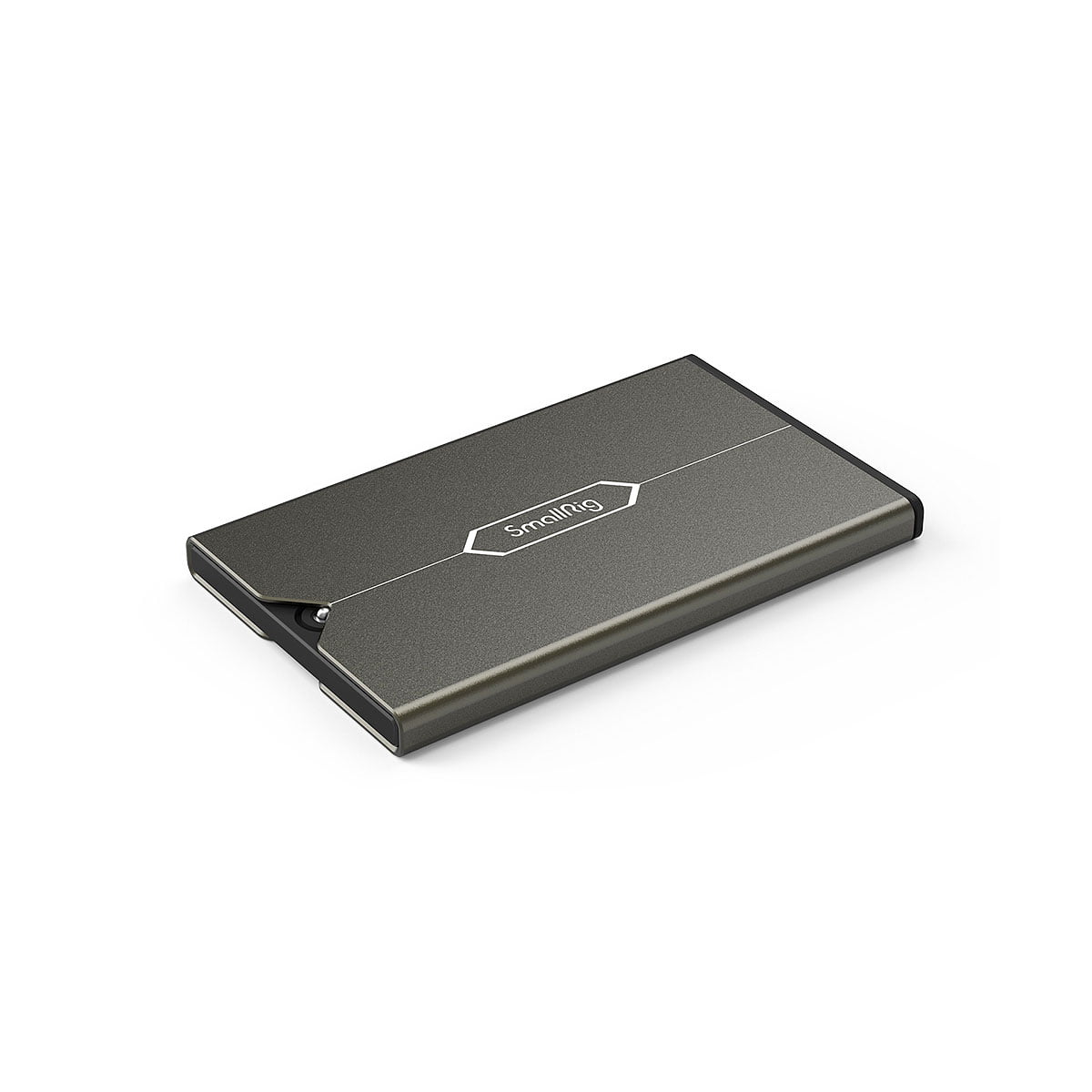
-
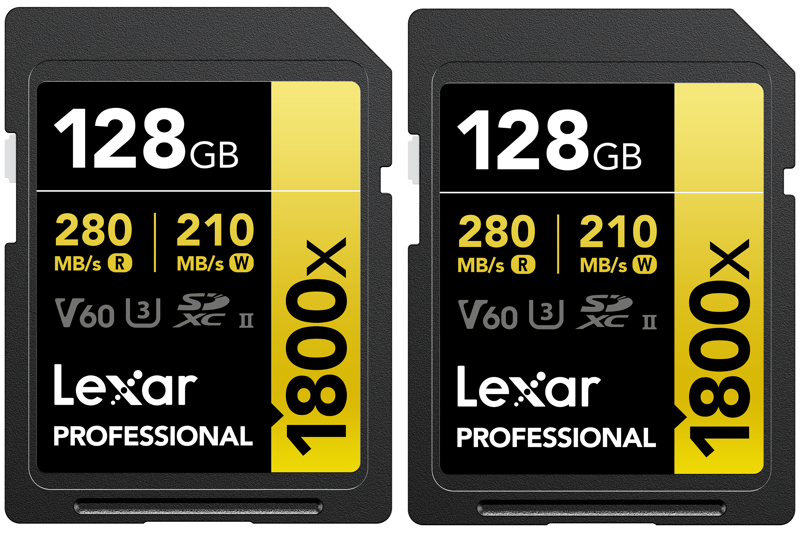
Lexar Pro 1800x SDXC U3 (V60) UHS-II R280/W210 128GB 2-pack memory card
- UHS-II V60, 280MB/s read, 210MB/s write
- 4K video and heavy professional use
- High resistance to heat and humidity
-
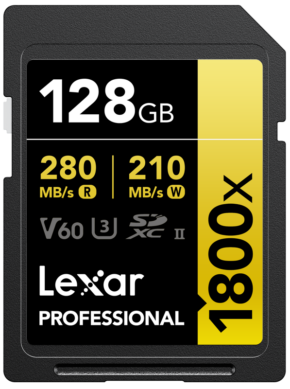
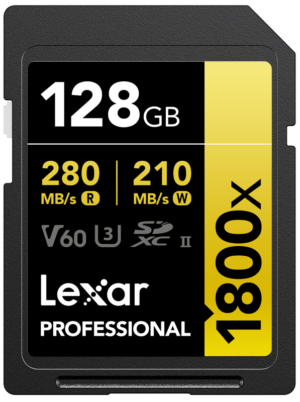
Lexar Pro 1800x SDXC U3 (V60) UHS-II R280/W210 128GB memory card
- Speed 280MB/s read, 210MB/s write
- 4K video and heavy-duty work requirements
- Resistant to heat, shock and humidity
-
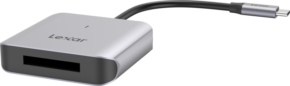
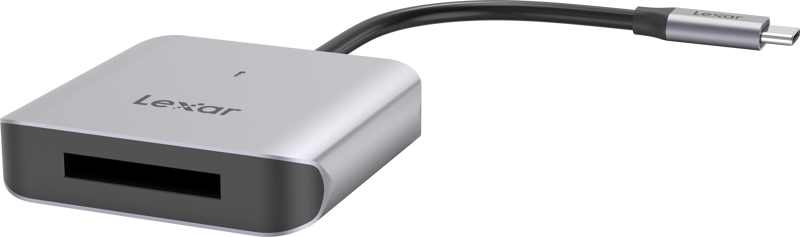
Lexar Cardreader CFexpress Type B (LRW510U) USB-C memory card reader
- 10 Gbps USB 3.2 Gen 2 speed
- CFexpress Type B card reader
- Built-in USB-C cable
-
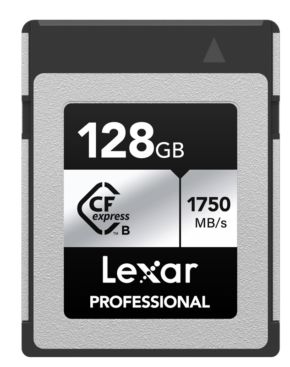
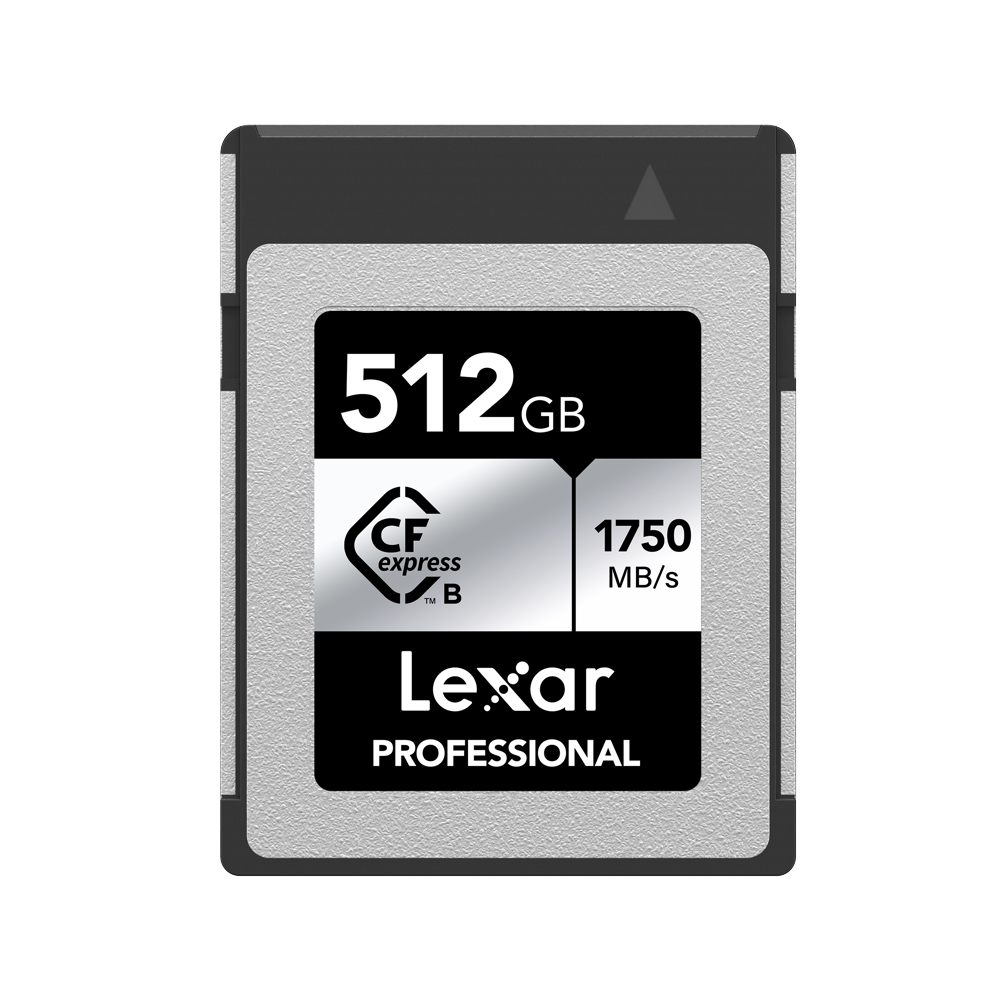
Lexar CFexpress Pro Silver Series R1750/W1300 128GB memory card
- 1750 MB/s read and 1300 MB/s write speed
- 8K video recording for professionals
- Compatible with XQD cameras
-
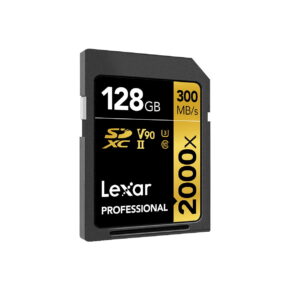
Lexar Pro 2000X SDHC/SDXC UHS-II U3(V90) R300/W260 128GB memory card
- Reading speed 300MB/s, writing 260MB/s
- U3 V90 standard 4K video
- Resistant to heat, shock and moisture
-
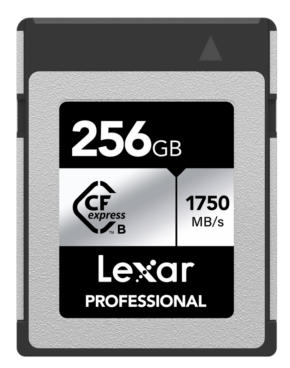
Lexar CFexpress Pro Silver Series R1750/W1300 256GB memory card
- 1750 MB/s read and 1300 MB/s write speed
- 8K video and high-resolution image
- 10-year warranty and designed for professional use
-
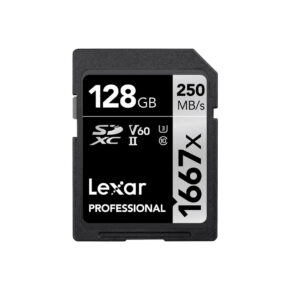
Lexar Pro 1667x U3 V60 UHS-II R250/W120 128GB memory card
- Speed: 250MB/s read, 120MB/s write
- 4K video and U3 V60 standards
- High resistance: heat, shocks, humidity
-
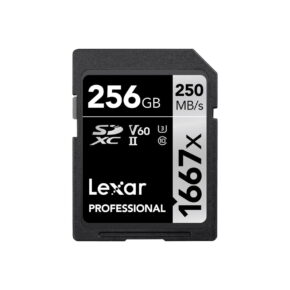
Lexar Pro 1667x U3 V60 UHS-II R250/W120 256GB memory card
- Speed: 250MB/s read, 120MB/s write
- 4K video and Full-HD imaging supported
- Resistant to heat, shock and moisture
-
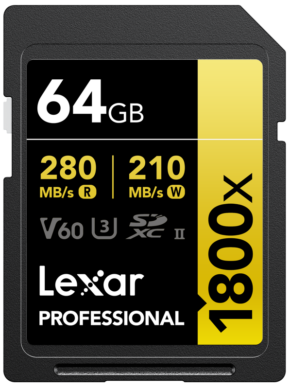
Lexar Pro 1800x SDXC U3 (V60) UHS-II R280/W210 64GB memory card
- Read 280MB/s, write 210MB/s
- 4K video and U3/V60 standards
- Resistant to heat and humidity
-
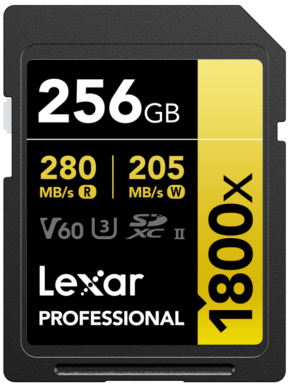
Lexar Pro 1800x SDXC U3 (V60) UHS-II R280/W210 256GB memory card
- 280MB/s read, 210MB/s write
- U3 V60 UHS-II 4K video
- Resistant to heat and shock
-
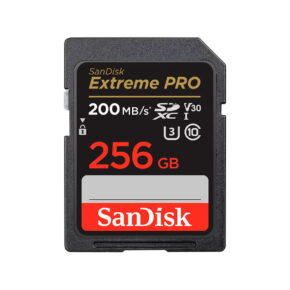
SanDisk SDXC 256GB Extreme Pro 200MB/s memory card
- 200MB/s read speed, 140MB/s write speed
- 4K video and fast file transfer
- Heat, water, impact and X-ray resistant
-
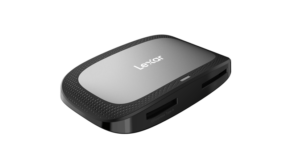
Lexar Cardreader LRW530U CFexpress Type A / SD UHS-II USB 3.2 memory card reader
- CFexpress Type A and SD support
- USB 3.2 Gen 2, 10 Gbps speed
- Compact, durable metal frame
Memory cards and readers
A memory card is a small device on which files are stored. To view, edit, store and share photos or videos taken with your camera, you need a device to store them on at the time of shooting. A memory card is therefore an essential item for every photographer. Memory card reader is a device that displays the contents of a memory card USB cable via your computer. There are many different types of memory cards and other storage devices:- SD/SDHC/SDXC memory cards are the most common types of memory cards used in cameras. SD cards have copy protection and overwrite protection, which prevents duplicate storage of files and damage initiation. The HC end means that the card has a storage capacity of 4-32GB and the XC end means that the card has a storage capacity of 64-2000GB.
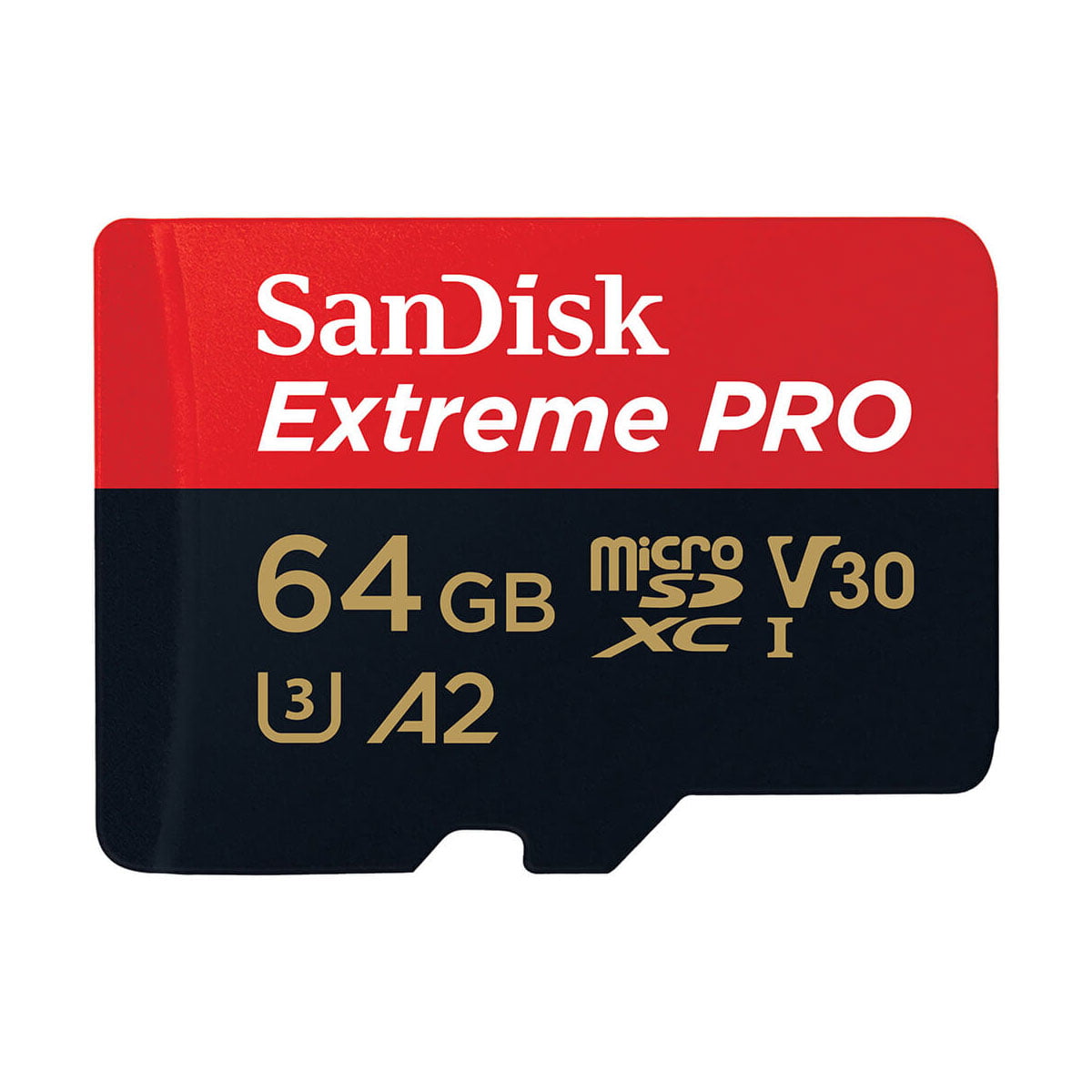
- MicroSD/SDHC/SDXC memory cards are similar to SD cards, but smaller in physical size. Smaller cameras often use these memory cards. MicroSD cards have similar characteristics to full-size SD cards. The cards have
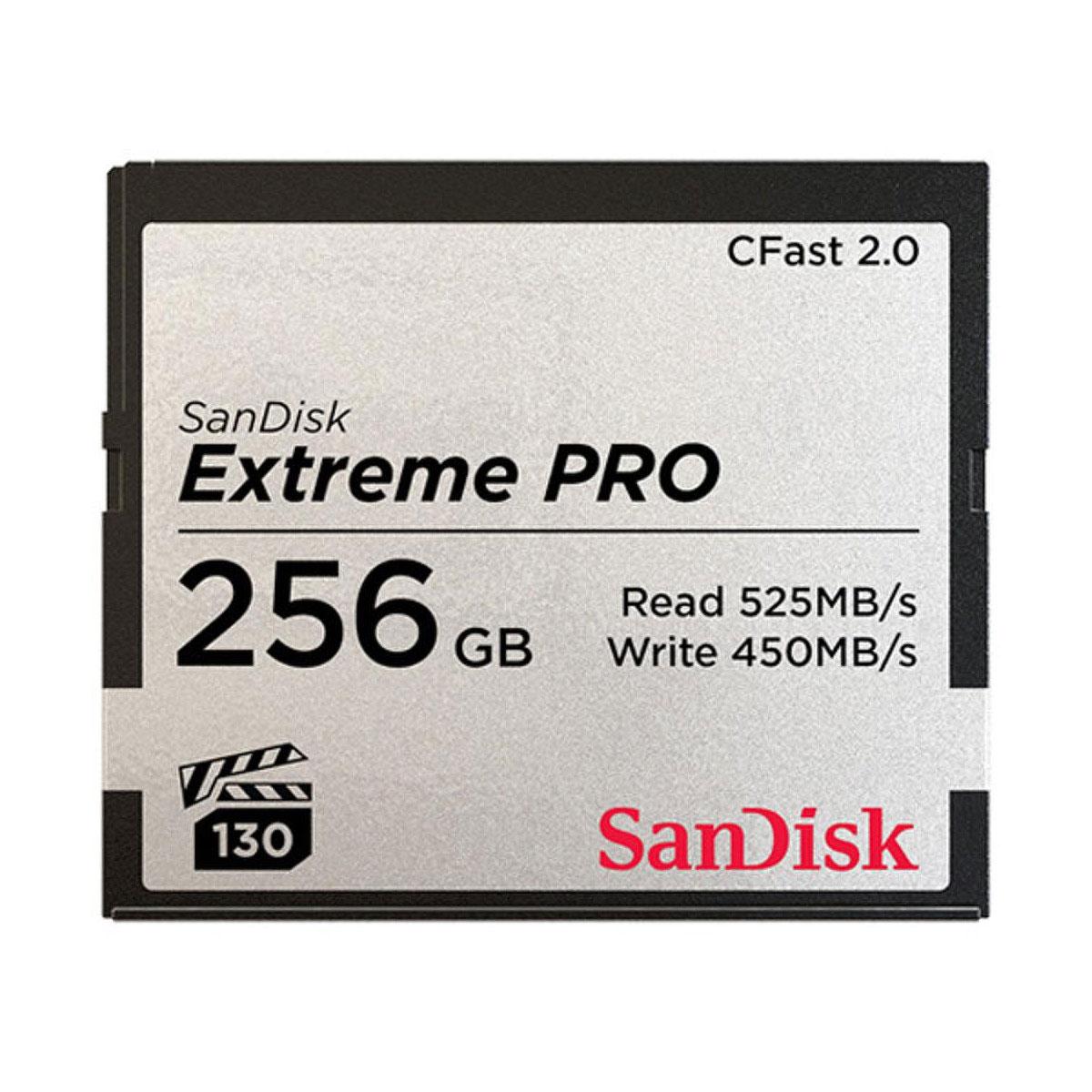
- Cfast memory cards belong to CompactFlash-family of memory cards. It is physically quite large for a memory card. Cfast memory cards are very fast (up to 600Mb/s) and have a large storage capacity. Cfast memory cards are used in Canon, Blackmagic and Arri film cameras, for example.
- CFexpress memory cards are by far the fastest memory cards on the market to date. They are theoretically capable of speeds of up to 4Gbps. There are three different types of CFexpress memory cards, with slightly different physical sizes. Type-A is the smallest and has a read speed of up to one gigabyte. Type-B is the most common of the three models and is capable of two gigabytes. Type-C is the size of a CompactFlash card and is capable of four gigabytes.
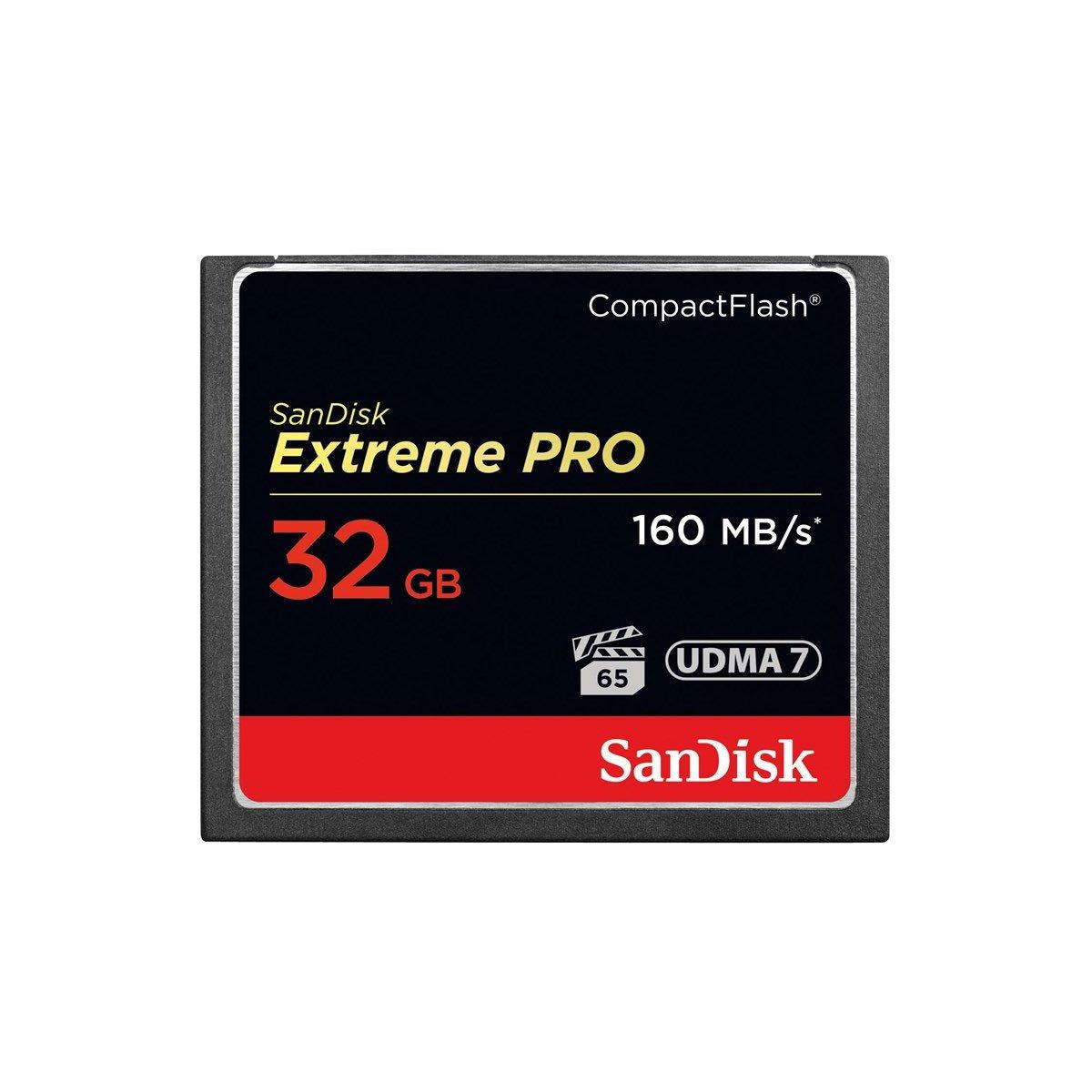
- CompactFlash (CF) memory cards are older, but still good memory cards. It is used in flagship DSLR cameras from Canon and Nikon, among others.
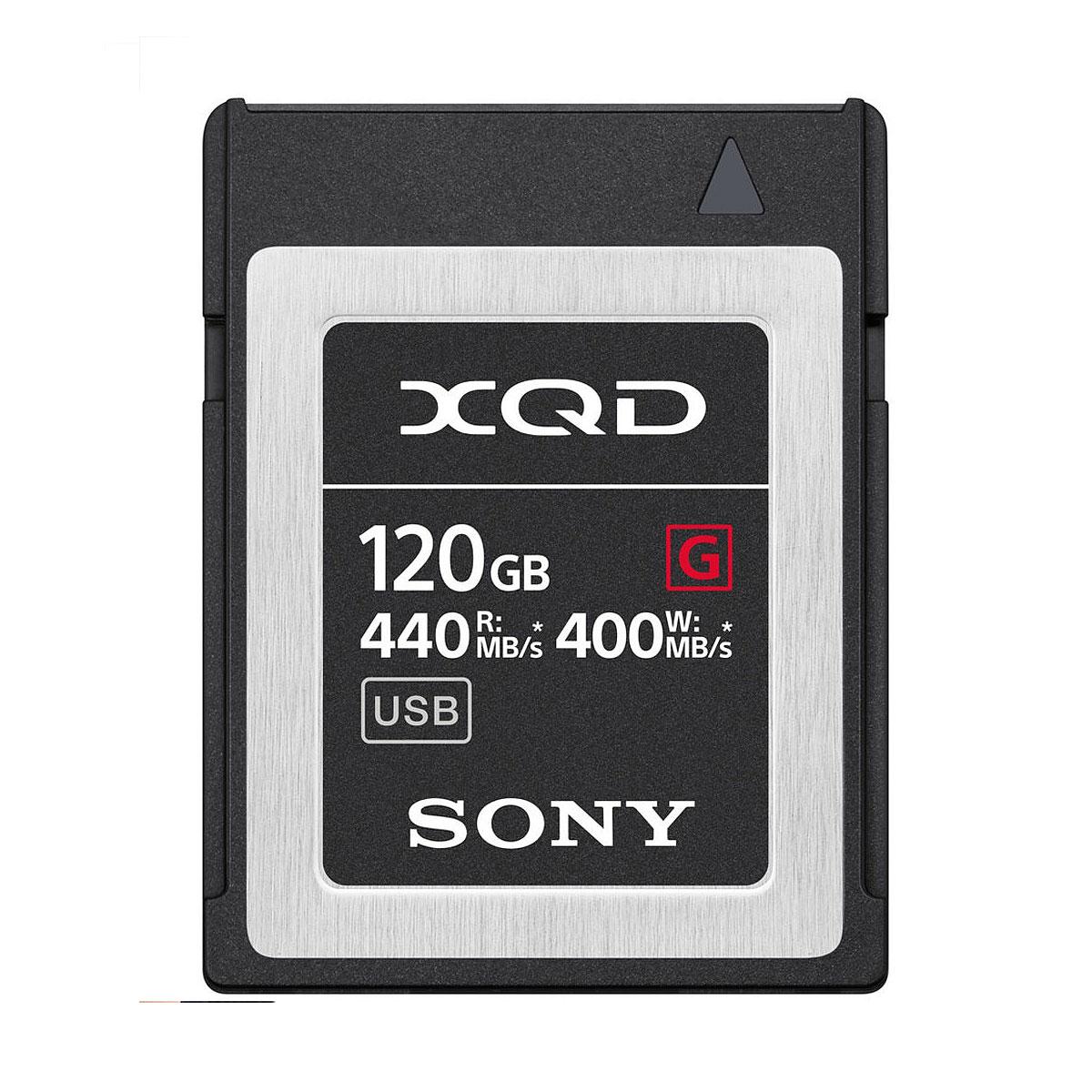
- XQD USB memory cards are large memory cards used by professional digital cameras. They are also quite fast. For example, professional system cameras from Nikon and Sony use these memory cards.
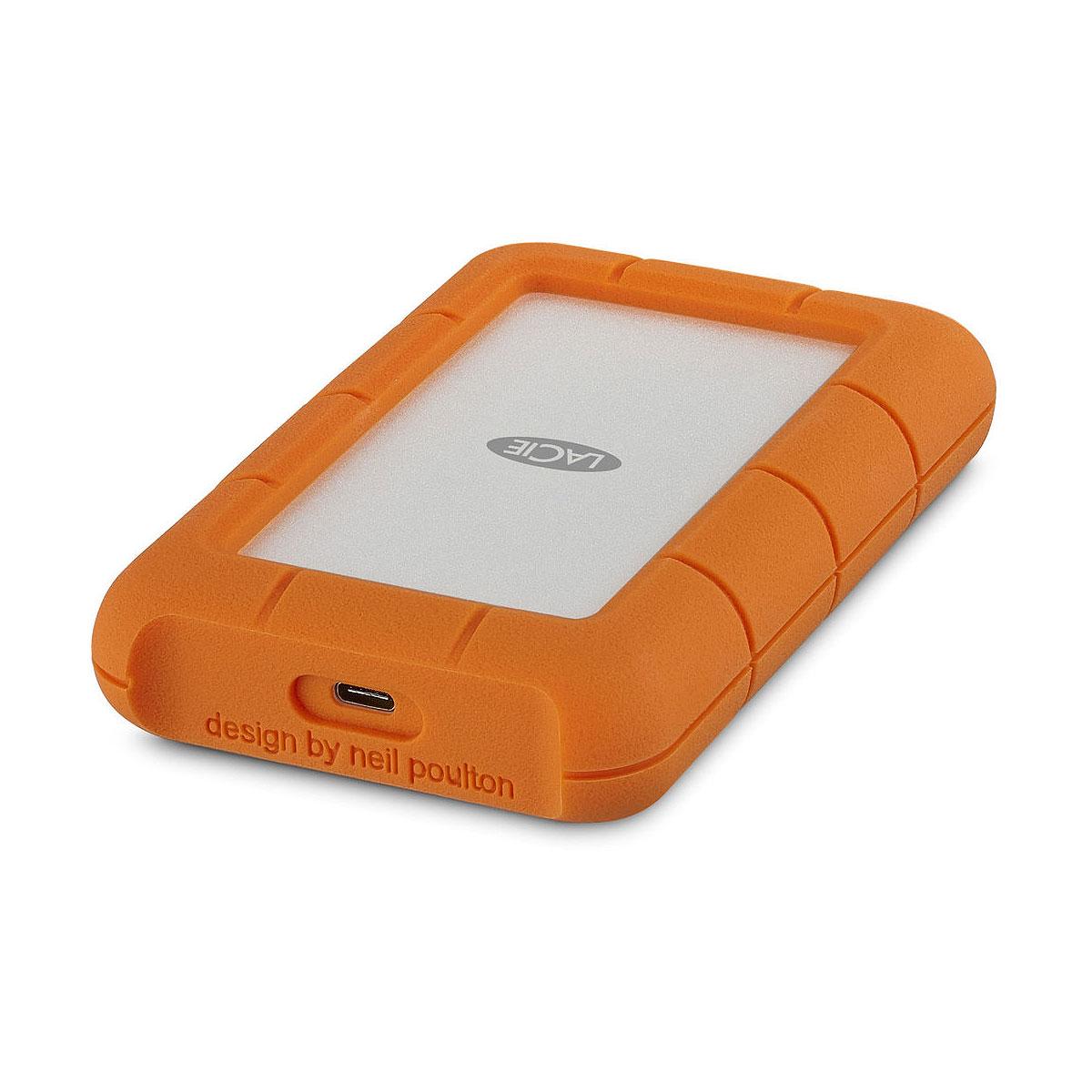
- External hard disks are therefore USB-large and fast storage devices that can be connected by cable. External hard disks are mainly used to transfer files on computers or to store files. Nowadays, some professional video cameras, such as BMPCC 6k, allow storage on large external hard drives via USB-C cable.
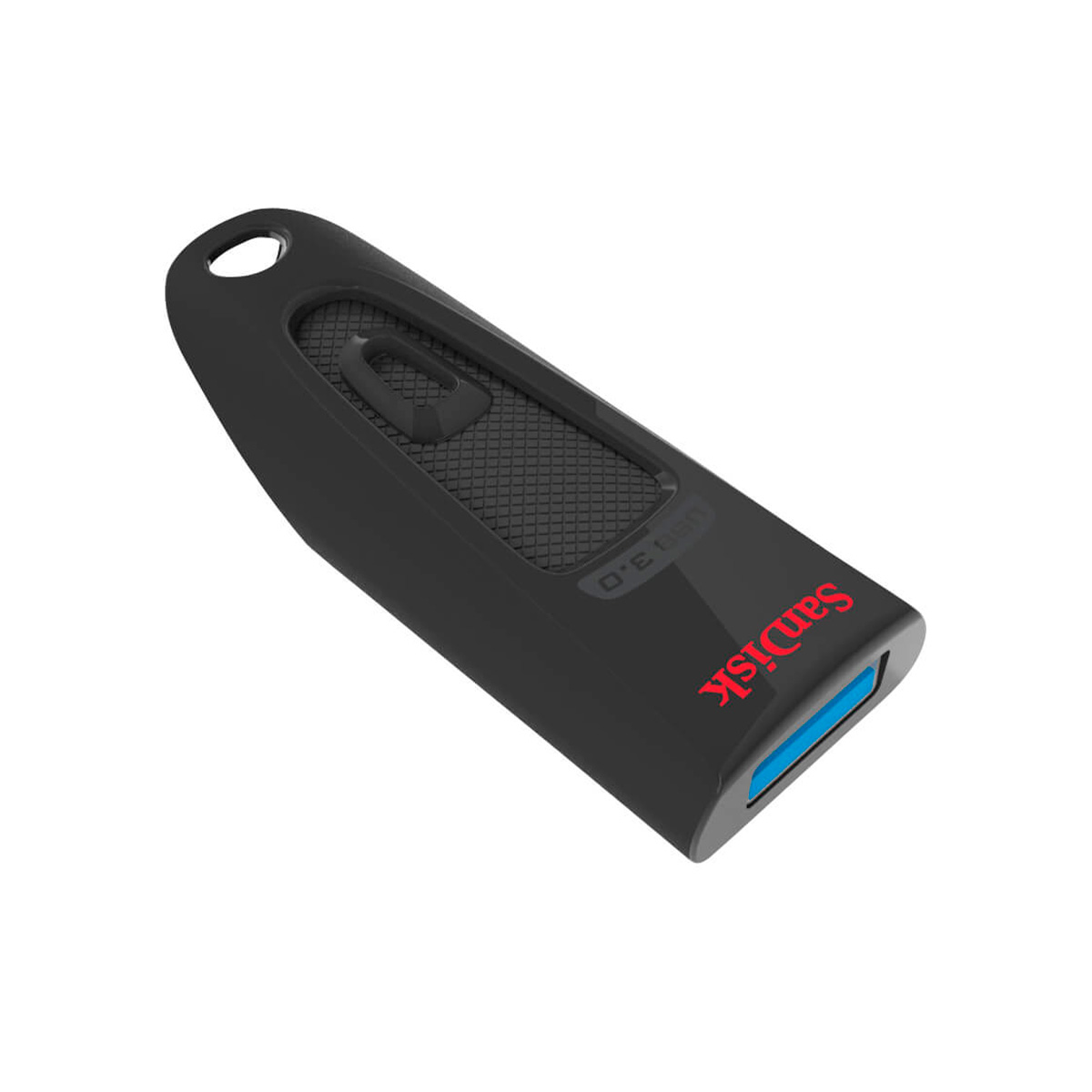
- SSD hard drives and USB flash drive are storage media for the computer, and are not used to record directly from the camera. SSDs are fast mass storage devices inside your computer that you can use to store the files you want on your computer. USB flash drives are the little sticks that everyone is sure to be familiar with. They're a handy way to transfer smaller files, like pictures or videos, from one computer to another.
- Storage capacity tells you how much data the card or device can hold. It is usually expressed in gigabytes (GB or GB) or terabytes (TB or TB). So one gigabyte is one billion bytes and one terabyte is one thousand gigabytes. In general, memory cards, memory sticks and hard disks currently have a capacity of around 2Gt-2Tt. To be clear, a 128GB memory card, for example, can hold about 25 hours of 4K video (20Mbps) or 35500 jpg images (12MP). It is not necessarily worth buying the largest memory card possible, but rather two smaller ones. That way, if something happens to one card, you won't lose all your files at once.
- Writing and reading speed is also an important issue in storage devices. The higher the read and write speed, the faster, for example, the camera will save files to the memory card and the faster the computer will display and transfer the files. The write speed therefore affects the speed of recording and the read speed affects the speed of transfer. If you are shooting in bursts or recording high quality video with your camera, it is important that you have a high write speed. If your memory card is capable of a transfer speed of 90 MB/s, it will take about 5min 30s to transfer a thousand RAW images.
- UHS-I and UHS-II -markings indicate the maximum data transfer rate. Cards marked UHS-I can transfer up to 104Mbps and cards marked UHS-II can transfer up to 312MBps.
Need help?
Call 05 - 3753220
We answer calls from 10-17 on weekdays and 10-15 on Saturdays
Customer service via chat
Get an immediate reply (during opening hours)
Come and visit the shop
In the Kouvola store you will find all the stock products and services offered
Join over 7000 customers
You're always the first to get the most important news
Free delivery
For orders over 1000 €
30 pv return period
Safe to shop
Customer service
Fast and knowledgeable
Payment methods
Versatile and safe
Always affordable
We monitor prices constantly

Foto Monza Oy - 3009635-7
Any questions? Give us a call
+358(0)5-3753220
© Copyright Foto Monza 2026
