


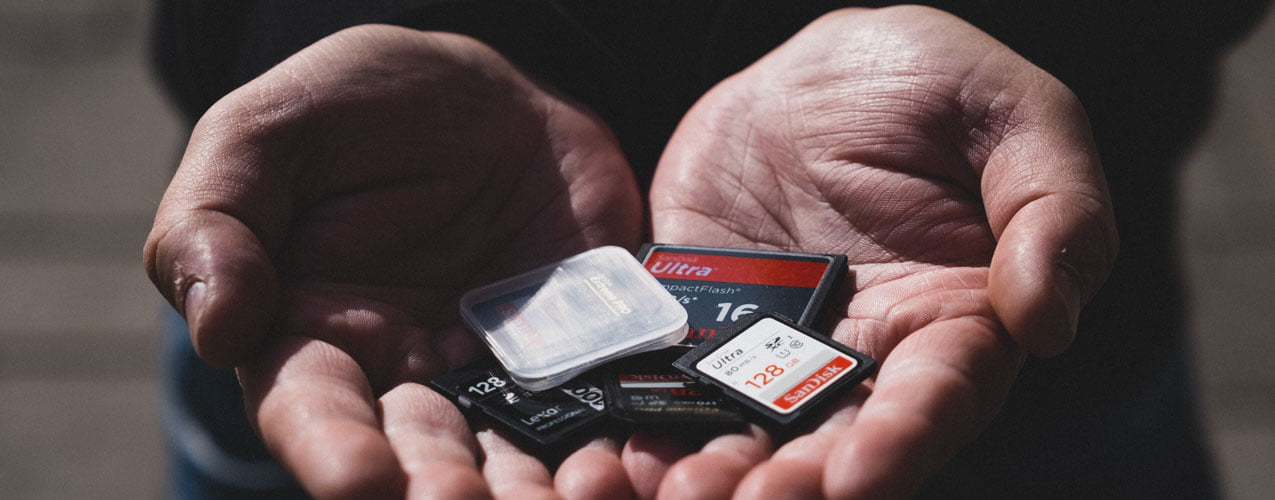
There is a very wide range of different memory cards, in different sizes and at different speeds, and finding the right one can be a challenge. This guide explains the criteria for choosing the right card, the different types of cards available and what the different memory card labels mean.
The most important thing is to find the right memory card for your needs. The bottom line is that when shooting video, you need a much bigger and faster card than when shooting stills. Serial photography, for example when shooting sports, also requires a faster card and usually more space.
Find out what type of card your camera supports and which card fits your camera. The fastest card is not always the best, as the camera itself may not be capable of the speed promised by the card. In most cases, you can find the appropriate card models in the user manual of your camera.
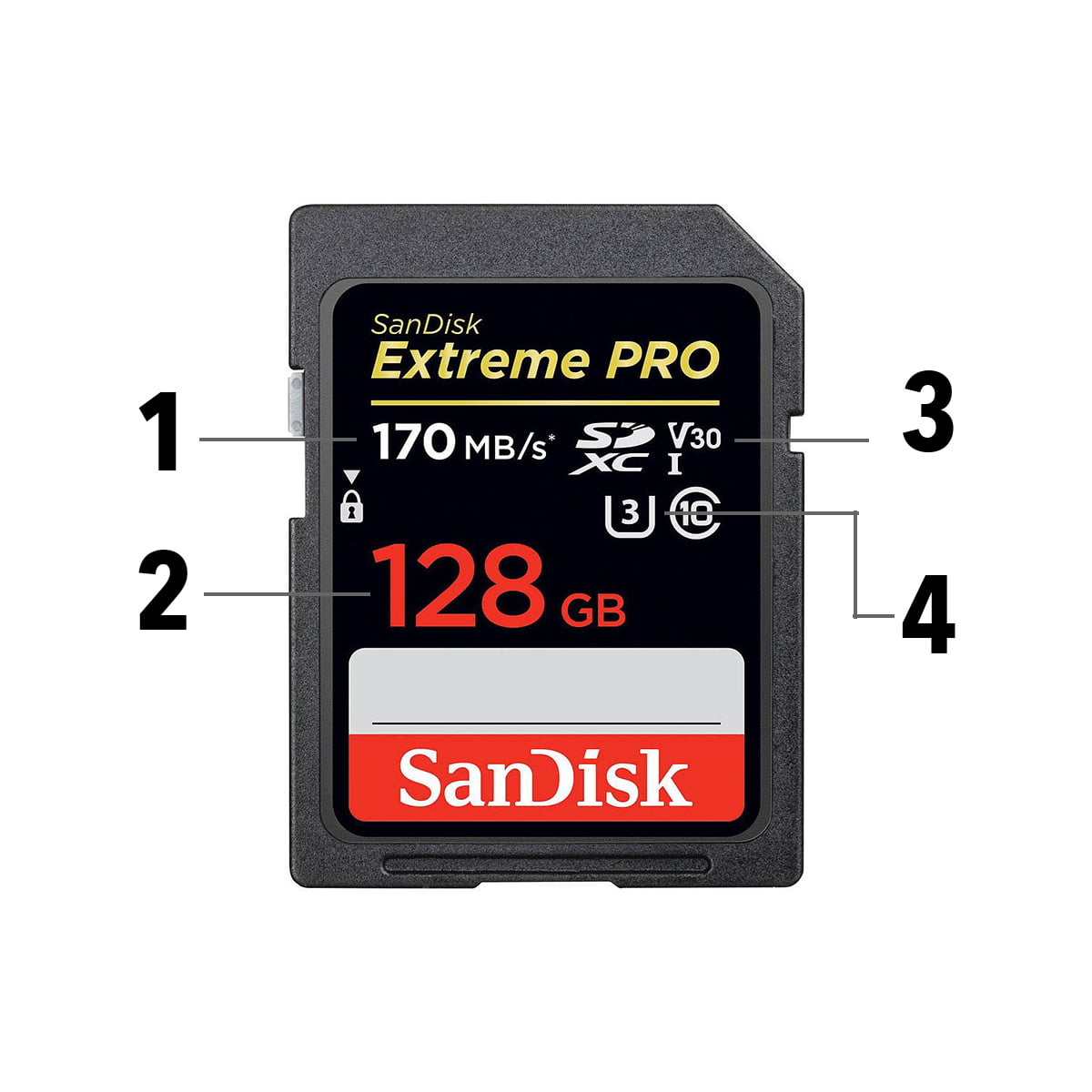
The GB number indicates the storage capacity of the memory card, the higher the number, the more storage space the card has. In general, 32GB and 64GB cards are good enough for normal shooting, a larger card is worth investing in if you shoot a lot of cartoons or video. SD cards are divided into two different categories according to storage capacity. HC cards have a storage capacity of 4-32GB and XC cards 64-2000GB.
The read and write speeds of memory cards indicate the speed of the card. The write speed is the speed at which the camera can record an image onto the card. The read speed tells you how fast you can transfer the image from the memory card to a computer, for example. 170MB/s and slower cards are fine for normal shooting, but you need a faster card for video and continuous shooting.
The UHS-I and UHS-II markings indicate the maximum data transfer rate of the memory card. Cards marked UHS-I can transfer up to 100Mbps and cards marked UHS-II can transfer up to 285Mbps.
More information about the different memory card labels can be found below!

Different types of memory cards
SD card
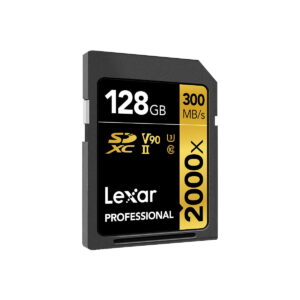
SD card is the most common type of memory card and is used by a large proportion of cameras. SD cards come in many different sizes and speeds, so choosing between them can be challenging. SD cards are equipped with copy and overwrite protection, which prevents duplication of files. Below are our most popular cards in this category.
-
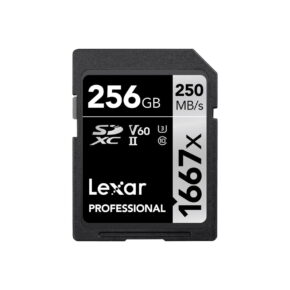
Lexar Pro 1667x U3 V60 UHS-II R250/W120 256GB memory card
- Speed: 250MB/s read, 120MB/s write
- 4K video and Full-HD imaging supported
- Resistant to heat, shock and moisture
-
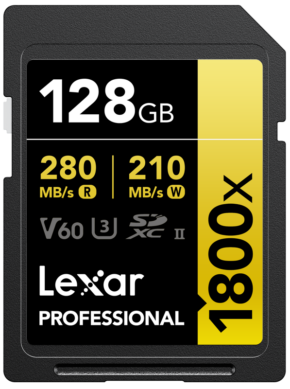
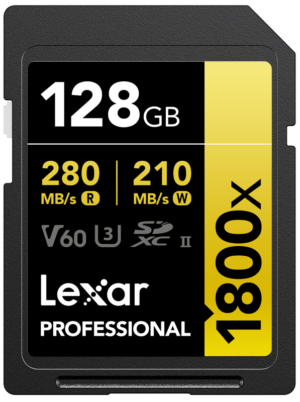
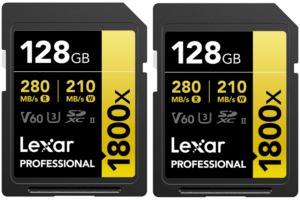
Lexar Pro 1800x SDXC U3 (V60) UHS-II R280/W210 128GB memory card
- Speed 280MB/s read, 210MB/s write
- 4K video and heavy-duty work requirements
- Resistant to heat, shock and humidity
-
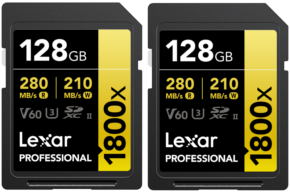
Lexar Pro 1800x SDXC U3 (V60) UHS-II R280/W210 128GB 2-pack memory card
- UHS-II V60, 280MB/s read, 210MB/s write
- 4K video and heavy professional use
- High resistance to heat and humidity
MicroSD card
MicroSD card is physically the smallest card and is mostly suitable for action cameras and drones. MicroSD is very similar to a traditional SD card in terms of features, with varying sizes and speeds. Below are our most popular cards in this category.
-
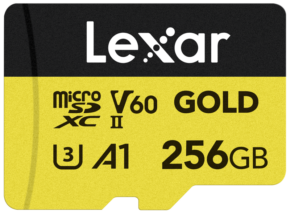
Lexar microSDXC GOLD UHS-II/C10/A1/U3 R280/W100 (V60) 256GB memory card
- 280MB/s read, 180MB/s write
- V60 class, 4K video recording
- UHS-II, for drones and action cameras
-
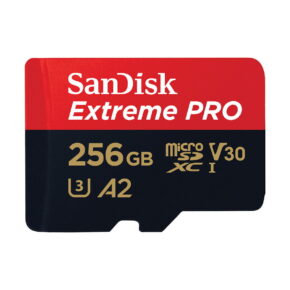
SanDisk MicroSDXC 256GB Extreme Pro 200MB/s memory card
- 200MB/s read speed for fast transfer
- V30 and U3 certified for 4K video
- Waterproof and heat-resistant construction
CFast card
Cfast on CompactFlash a slightly newer version of the memory card, a common card in system cameras. Often a high-capacity, high-speed card designed specifically for professional use, for example in film production. Below are our most popular cards in this category.
CFexpress card
CFexpress cards are currently the fastest and most powerful memory cards on the market. There are two types of CFexpress cards: Type-A and Type-B. Between these, the physical size of the cards varies, as well as their speed. The latest Canon, Sony, Nikon and Panasonic professional cameras use CFexpress cards, making them a must-have if you want to benefit from all the features of your camera. Below are our most popular cards in this category.
-
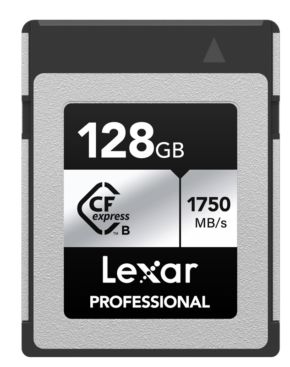
Lexar CFexpress Pro Silver Series R1750/W1300 128GB memory card
- 1750 MB/s read and 1300 MB/s write speed
- 8K video recording for professionals
- Compatible with XQD cameras
-
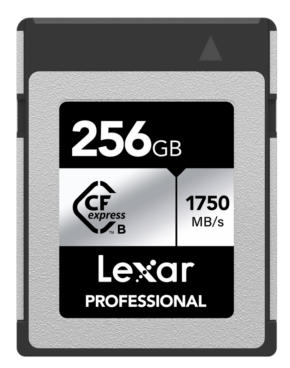
Lexar CFexpress Pro Silver Series R1750/W1300 256GB memory card
- 1750 MB/s read and 1300 MB/s write speed
- 8K video and high-resolution image
- 10-year warranty and designed for professional use
Other card types
In addition to the most common types of memory cards mentioned above, there are also CompactFlash and XQD memory cards. In principle, CompactFlash is a slightly older model, but many Nikon and Canon cameras still use this card. This card has a very reliable design, but newer cards have already overtaken it in speed. The XQD card is less common and is only used by newer Nikon and Panasonic cameras, the CFexpress Type B card is equivalent to the XQD card and with more recent updates is also available for cameras using the XQD card.