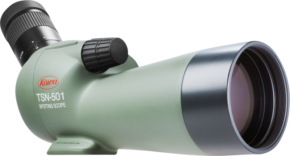
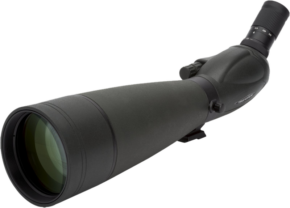
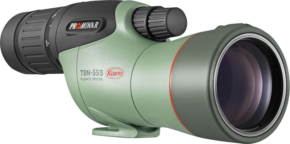
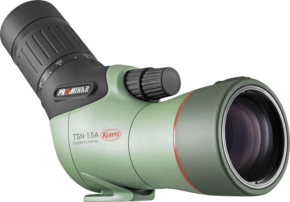
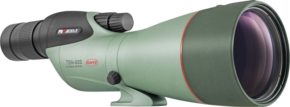
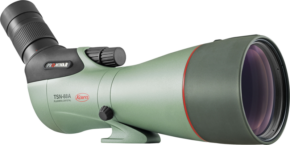
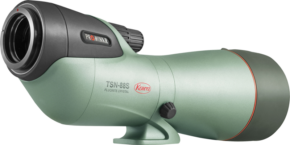
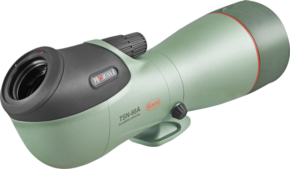
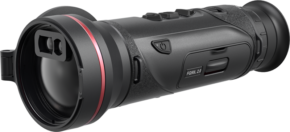
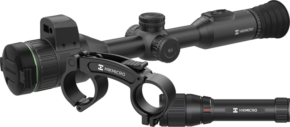
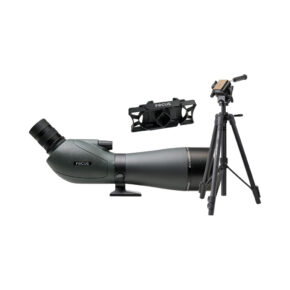
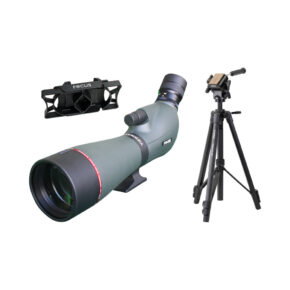
Remote tube It brings distant subjects closer: waterbirds on the open water, waders in the shore meadows and birds of prey at the edge of the forest. Spotting scopes typically offer a magnification of 20–60 times, which is many times greater than that of binoculars.
Our range includes products highly regarded by birdwatchers KOWA, Nikon Monarch and Focus -telescopes and ready-made kits complete with a tripod. Not sure which model is right for you? Read on A Guide to Choosing a Telescope.
Magnification – A 20–60x zoom eyepiece is the most versatile. Most observations are carried out at a magnification of 25–40x.
Lens size – 50–65 mm is ideal for light hikes and trips, whilst 77–100 mm provides a clearer image in low light and at high magnifications.
ED or APO glass – removes colour fringing and improves sharpness. Well worth the price if you use a tube a lot or take photos through it.
Crooked or straight? – Angled binoculars are a favourite amongst birdwatchers, whilst straight-tube binoculars make it easier to locate and observe subjects from a car.
Pedestal – A telescope needs a sturdy tripod and a video head. The easiest way is to choose a package that includes a tripod.
Binoculars are worn around the neck and used to spot birds, whilst a telescope is used to identify them – most enthusiasts use both. Take a look at our range: binoculars and bases and base caps.
Our telescopes are designed for outdoor use. They can also be used to view the moon, but we do not stock astronomical telescopes.