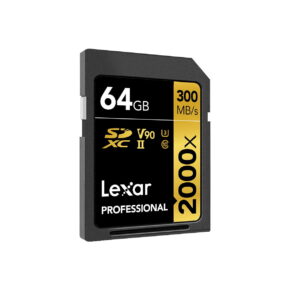
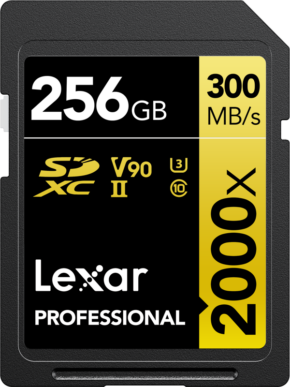
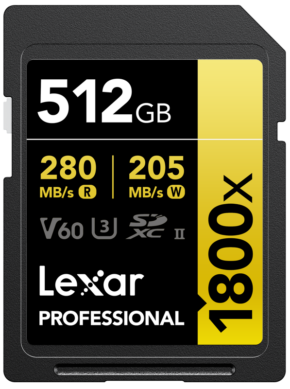
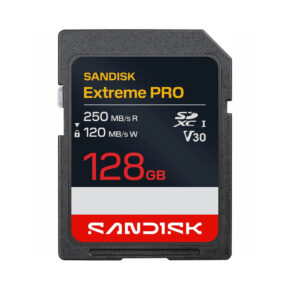
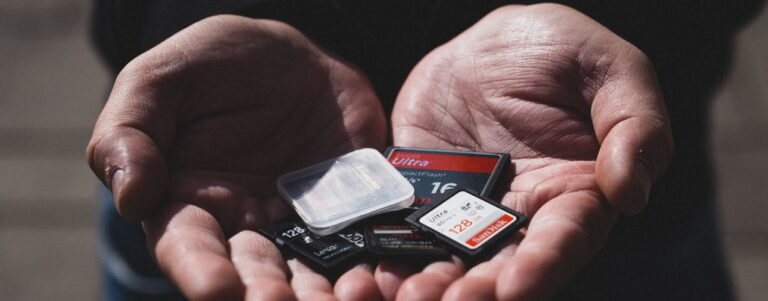
SD memory cards are the most common type of memory card for cameras – almost every system camera, compact camera and video camera has at least one SD card slot.
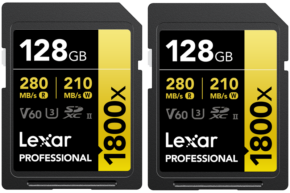
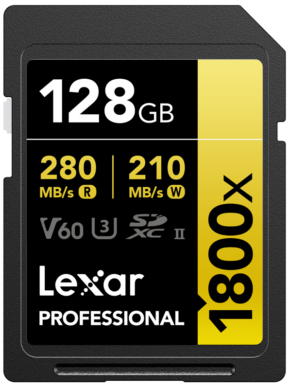
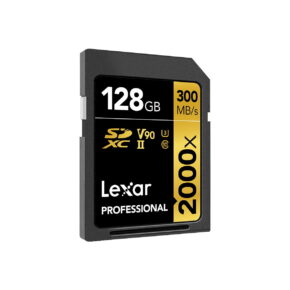
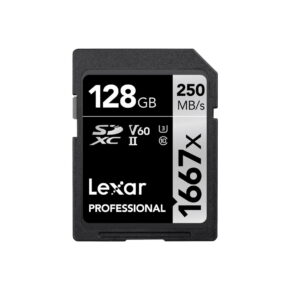
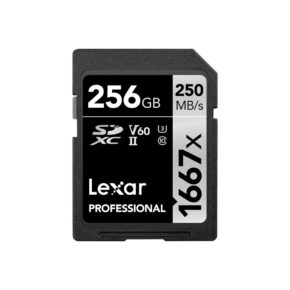
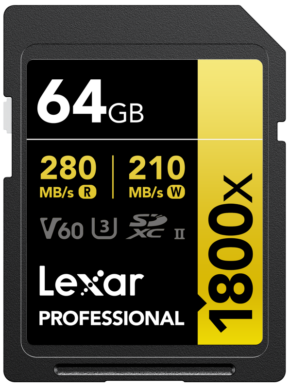
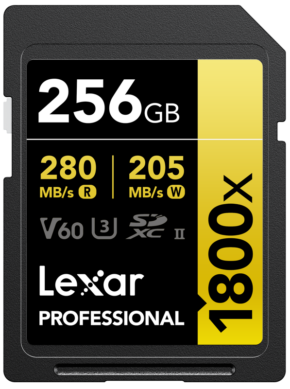
Our range includes high-speed UHS-II cards in the V60 and V90 speed classes from Lexar, SanDisk and Angelbird.
The most important selection criterion is the card’s writing speed. A fast memory card clears the camera’s buffer memory more quickly during continuous shooting and ensures that video recording is not interrupted.
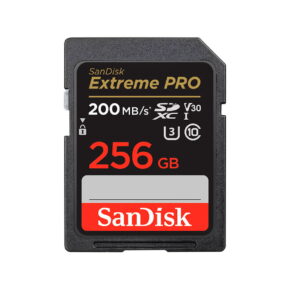
Photography and Full HD video – U3 / V30 riittää hyvin. Esimerkiksi SanDisk Extreme Pro 128 Gt on tähän edullinen ja luotettava valinta.
4K video and fast continuous shooting – V60 UHS-II is a good choice for most modern system cameras.
High-bitrate 4K, 6K and 8K video, as well as All-Intra video – V90 UHS-II. Check your camera’s user manual to see which speed class the shooting mode requires.
UHS-II cards also work in a UHS-I slot, but in that case the card operates at UHS-I speeds. The full speed is only utilised if both the camera and the card reader support UHS-II.
A brief guide to the markings
SDHC / SDXC – SDHC cards range from 4 to 32 GB, whilst SDXC cards range from 64 GB to 2 TB.
UHS-I / UHS-II – the interface that determines the card’s maximum speed. UHS-II cards have a second row of connectors and are significantly faster.
Read and write speeds (e.g. R280 / W180) – the card’s maximum speeds in MB/s. The read speed affects how quickly images are transferred to the computer.
Tips for using memory cards
Always initialise a new card in the camera before using it for the first time.
If your camera has two card slots, use the second one to keep a backup during important shoots.
Two smaller memory cards are safer than one large one – if one card fails, you won’t lose all your photos.
A fast UHS-II card reader significantly reduces the time taken to transfer images.