Any questions? Give us a call 05 375 3220

Free delivery for orders over 1000 € / 30 days Return policy
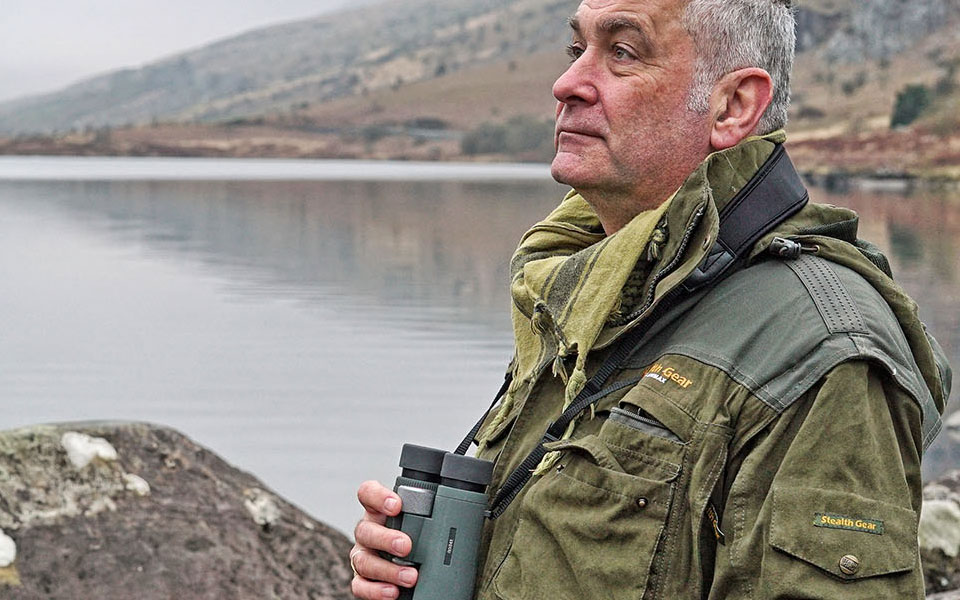
A Guide to Choosing a Telescope – How to Choose a Telescope for Birdwatching and Nature Observation

Binoculars let you see things up close, but when the subject is far away – a waterbird behind you, a wader in a riverside meadow or a bird of prey at the edge of the forest – you need telescope. A spotting scope typically magnifies 20–60 times, which is three to six times more than standard binoculars. In this guide, we’ll go through what to look for when choosing a spotting scope and what sort of spotting scope suits different people.

Please note: this guide covers spotting scopes intended for outdoor use. Astronomical telescopes are a separate product category and are not included in our range.

Magnification: a 20–60x zoom eyepiece is the most common

Telescope designation, for example 20–60 × 80, indicates the magnification (20–60x zoom) and the lens diameter (80 mm). A zoom eyepiece is the most practical choice: at low magnification, you can easily locate your subject and see a wide area; at high magnification, you can examine the finer details.

It is not advisable to stare at the highest magnification: at magnifications of over 40x, any blurring, low light or even the slightest vibration will significantly impair the image. In practice, most observations are carried out at a magnification of 25–40 times.

Lens size: 50–65 mm or 80–100 mm?

  • 50–65 mm: Lightweight and compact, it’s easy to take along on outings and trips. It performs well in daylight and at medium magnifications.
  • 77–100 mm: It clearly gathers in more light, so the image remains bright at high magnifications and during the early morning and evening twilight. This is the most popular size category amongst birdwatchers, but the tube and tripod are heavier.

Rule of thumb: if you walk a lot or travel frequently, choose a lighter lens. If you’re mainly observing from a birdwatching tower, the beach or near your car, choose a larger lens.

ED and APO lenses – are they worth the extra cost?

Ordinary glass refracts the different colours of light to slightly different points, which, at high magnifications, is visible as colour fringes and a soft appearance, for example in the outline of a bird against a pale sky. ED glass (extra-low dispersion) and APO- The design significantly reduces this. The difference is particularly noticeable at magnifications of over 30x and when digiscoping. If you use your telescope a lot, the ED model is well worth the price.

An angled or straight eyepiece?

  • Angled (45°): The most popular choice amongst birdwatchers. The tripod can be set lower, making it comfortable to use for long periods; it is easier to look upwards (e.g. at migratory birds); and people of different heights can all use the same spotting scope.
  • Straight: It’s easier to find your target because the tube points directly where you’re looking. It’s ideal for viewing from a car, using a window mount, and for looking downwards.

A telescope needs a good mount

A telescope cannot be used handheld, so the mount is just as important as the telescope itself. A wobbly mount will ruin even the best optics. Choose a sturdy tripod and Video header (fluid-damped head), which allows the tube to be smoothly swivelled to follow a bird in flight. Many telescopes are available as a complete set including a tripod. See bases and base caps.

Digiscoping – taking photographs through a telescope

In digiscoping, a telescope is used as a telephoto lens for a camera or mobile phone. An adapter is used to attach a mobile phone or camera to the eyepiece, resulting in photos and videos that would require a focal length of thousands of millimetres with a standard telephoto lens. The quality of the telescope’s optics (ED glass) and a sturdy tripod have the greatest impact on the results. Check that the adapter is compatible with the telescope’s eyepiece.

Our recommendations by price range

For beginners and occasional use

Focus-Telescopes are an affordable way to get started. The kits come with a tripod included, so you get everything you need in one go.
  • Add to cart
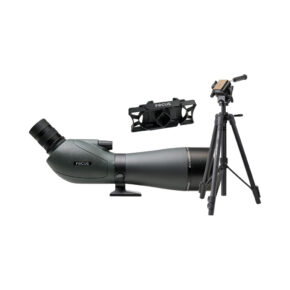
    Kit Focus ViewMaster 20 60x80 W VM638 Digi Ad

    Focus Viewmaster 20–60×80 w VM638 + Digi ad Telescope

    (0)
    • 80 mm fast front lens
    • 20–60x adjustable magnification
    • Waterproof, nitrogen-filled
    398.90 €
    In stock - fast delivery ( 1 piece in our own stock )+10 pieces at suppliers stock
  • Add to cart
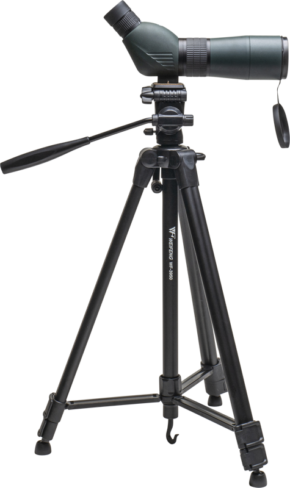
    The Focus Outdoor 15-45x60 binoculars are mounted on a WF3950 tripod with adjustable feet and panoramic grip, when viewed from the side against a white background.

    Focus Outdoor 15-45×60 + WF3950 tripod

    (0)
    • 15–45x magnification, fully anti-reflective optics
    • Waterproof, screw-top eye dropper
    • A compact, lightweight tripod set
    132.90 €
    At supplier ( Delivery 4-7 days )

For enthusiasts: ED glass and improved brightness

Nikon Monarch ED and Focus ED/APO - These telescopes provide a sharp, colour-accurate image even at high magnifications. A good choice for the keen birdwatcher.
  • Add to cart
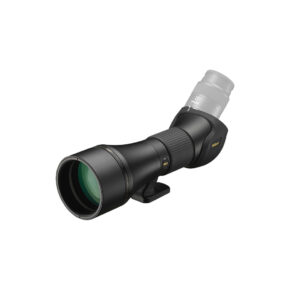
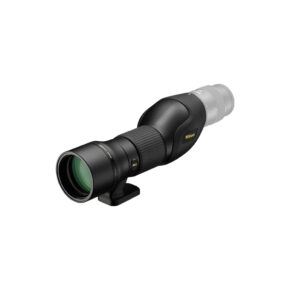
    The Nikon Monarch 60ED-S is a black, matte-finish scope with a large front lens and angled eyepiece mounted on a compact support bracket against a white background.

    Nikon Monarch 60ED-S telescope

    (0)
    • ED glass minimises colour defects
    • Sharp right to the edges
    • Waterproof and frostproof
    1119.90 €
    Backorder
  • Add to cart
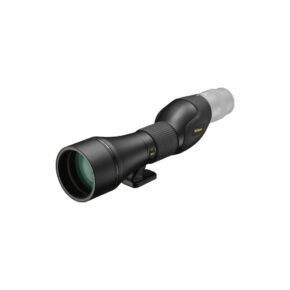
    The Nikon Monarch 82ED-S is a black telescope with a large objective lens, angled eyepiece and mounting base, shown against a white background.

    Nikon Monarch 82ED-S telescope

    (0)
    • 82 mm ED apochromatic optics
    • Waterproof and frost-proof construction
    • A sharp image right to the edges
    1648.90 €
    Backorder
  • Add to cart
    The Nikon Monarch 82ED-A is a black spotting scope with a large front lens, textured focusing ring and attached mounting foot, shown on a white background. The semi-transparent eyepiece highlights the main body.

    Nikon Monarch 82ED-A telescope

    (0)
    • 82 mm ED optical apochromatic system
    • Sharp vision right to the edges
    • Completely waterproof and fog-free
    1698.90 €
    Backorder

For demanding use: KOWA Prominar

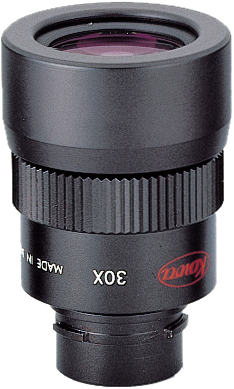
KOWA is one of the most highly regarded telescope manufacturers amongst birdwatchers. The fluorite glass in the Prominar series produces an exceptionally bright and sharp image, and the 99 mm objective lens in the TSN-99 series is among the very best in its class. Some KOWA models are sold as a body only, with the eyepiece selected separately – please check the product page for details.
  • Add to cart
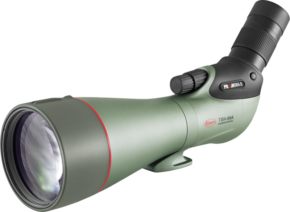
    The KOWA Spottingscope TSN-99S PROMINAR 30-70xW zoom is a green, angled telescope with a large lens and focus knob, ideal for telescopes and bird watching.

    Kowa TSN-99S PROMINAR 30-70xW zoom spotting scope

    (0)
    • 99 mm fluorite lens, excellent in low light
    • 30-70x zoom, sharp details
    • Magnesium body, lightweight and portable
    4588.90 €
    Backorder
  • Add to cart
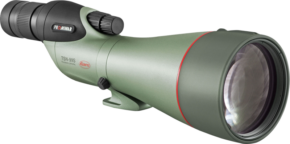
    The KOWA Spottingscope TSN-99A PROMINAR 30-70xW zoom is a green-angle telescope with a large lens, ideal for nature observation and bird watching.

    Kowa TSN-99A PROMINAR 30-70xW zoom spotting scope

    (0)
    • 99 mm objective lens, best in low light
    • 30-70x zoom, sharp details without colour distortion
    • Magnesium body, lightweight and portable
    3975.90 €
    At supplier ( Delivery 4-7 days )

Binoculars or a telescope?

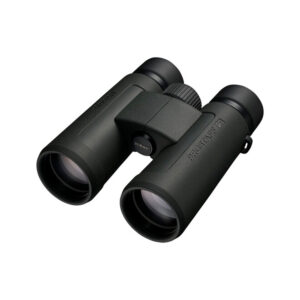
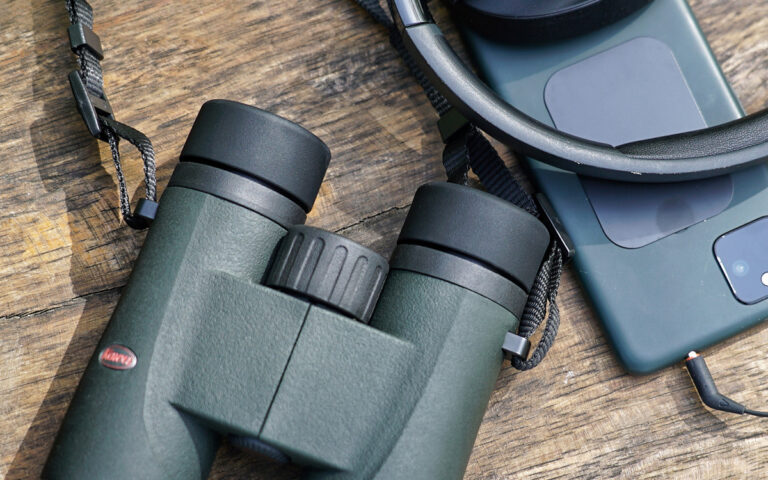
Most birdwatchers need both: binoculars are always worn around the neck and are used to locate and track birds, whilst a telescope is used to identify distant subjects. If you’re buying your first pair of optical instruments, start with a good-quality pair of binoculars (e.g. 8×42 or 10×42) and add a telescope when the range of your binoculars starts to feel insufficient. Take a look at our range binoculars and telescopes.

Frequently asked questions

What is the best telescope for birdwatching?

For most people, the best combination is an ED-glass telescope with an approximately 80 mm objective lens, an inclined eyepiece and a 20–60x zoom, fitted with a sturdy tripod and a video head. If weight is a consideration, a 60–65 mm model is a good compromise.

Can you use a telescope to look at the stars and the moon?

The Moon and the brightest planets can be observed very well with a spotting scope, but for deep-sky objects, such as galaxies and nebulae, you need an astronomical telescope with a significantly larger objective lens. Our range includes Celestron's astronomical telescopes From beginner’s lens tubes to computer-controlled telescopes.

Is the telescope waterproof?

Most high-quality spotting scopes are waterproof and nitrogen-filled, which prevents the lenses from fogging up inside when the temperature fluctuates. Check this feature on the product page, as it is important in Finnish conditions.

Can I try out the telescopes before buying them?

Please do come to our shop in Kouvola to compare models and ask for advice. We’d be delighted to help you choose a telescope and mount that’s just right for your needs.


Browse binoculars and telescopes

Jyri Seppälä
Jyri Seppälä
Articles: 37

Leave a Reply

Your email address will not be published. Required fields are marked *

Need help?

We answer calls from 10-17 on weekdays and 10-15 on Saturdays
Customer service via chat
Get an immediate reply (during opening hours)
WhatsApp
You can leave us a message via WA 24/7.
Come and visit the shop
In the Kouvola store you will find all the stock products and services offered
Email
You can email us at [email protected].
E-commerce settings
You can update information through your own account

Join over 7000 customers

You're always the first to get the most important news

Free delivery

For orders over 1000 €

30 pv return period

Safe to shop

Customer service

Fast and knowledgeable

Fast delivery

Usually delivered the very next working day

Always affordable

We monitor prices constantly
© Copyright Foto Monza 2026

Share cart