Any questions? Give us a call 05 - 375 3220
Free delivery for orders over 1000 € / 30 days Return policy
Any questions? Give us a call 05 - 375 3220
Free delivery for orders over 1000 € / 30 days Return policy
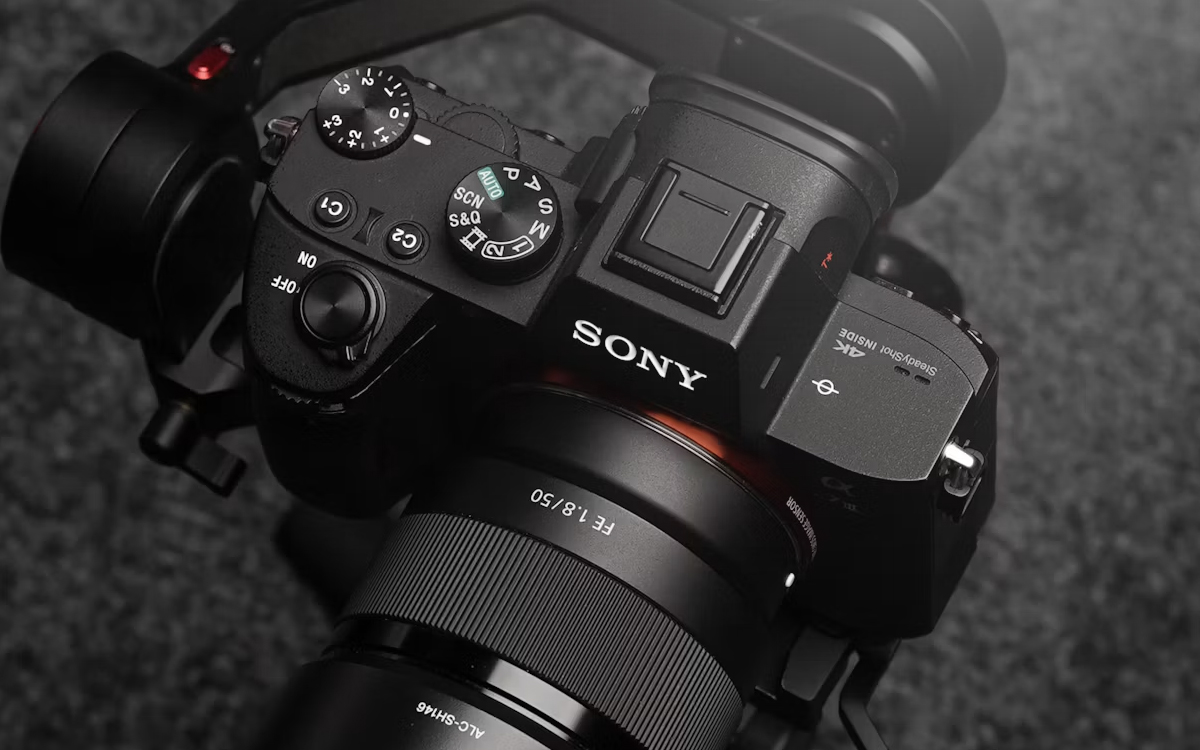
The Sony A7 IV has been one of the most popular full-frame cameras since 2021. In December 2025, it was succeeded by, Sony A7 V. It still has 33 megapixels, so on paper the difference seems small. In practice, however, the cameras are very different: the A7 V is significantly faster and focuses better, and the video it captures is of higher quality. In this comparison, we’ll look at what has changed, what has stayed the same, and who would benefit from the upgrade.
| Sony A7 V | Sony A7 IV | |
|---|---|---|
| Published | December 2025 | October 2021 |
| Cell | 33 Mp, partially stacked | 33 Mp, BSI |
| Processor | BIONZ XR2 + AI unit | BIONZ XR |
| Comic strip | 30 frames per second (electronic, no blackout), 10 frames per second (mechanical) | 10 frames per second |
| Pre-recording | Yes, up to 1 second before the shutter is released | no |
| Focus | AI-based object recognition: people, animals, birds, insects and vehicles | Eye-detection focus: people, animals and birds |
| Image stabilizer | up to 7.5 stops | up to 5.5 stops |
| 4K video | 4K 60p across the full width of the sensor (7K oversampling), 4K 120p with Super 35 crop | 4K 30p full frame, 4K 60p with Super 35 crop |
| Rolling shutter | about 15 ms | about 70 ms |
| Rear screen | 3.2″, 2.1 million pixels, rotates in four directions | 3.0″, 1.04 million pixels, tilting |
| Searching | 3.69 million pixels, OLED | 3.69 million pixels, OLED |
| Battery life (CIPA) | around 630–750 photos | around 520–580 photos |
| Battery | NP-FZ100 | NP-FZ100 |
| Memory cards | 2 × SD UHS-II, one of which is also CFexpress Type A | 2 × SD UHS-II, one of which is also CFexpress Type A |
| USB-C | 2 | 1 |
| Printed from | approximately 695 g | approximately 658 g |
The biggest change is the sensor. The A7 V’s 33-megapixel sensor is partially stacked, so data is read from it several times faster than from the A7 IV’s sensor. As a result, the A7 V shoots at 30 frames per second using an electronic shutter, with focus and exposure tracking the subject throughout the entire burst. The viewfinder image does not darken whilst shooting, making it easy to track a moving subject. The A7 IV shoots at 10 frames per second, and its electronic shutter distorts fast movement.
Another new feature is pre-capture: when you press the shutter button halfway, the camera captures images even before the actual shot is taken, for up to one second. You’ll no longer miss that decisive moment – whether it’s a bird taking flight, a runner crossing the finish line or a dog in mid-leap – simply because of your reaction time.
The A7 V’s BIONZ XR2 processor features a dedicated AI unit that recognises people, animals, birds, insects, cars, trains and aeroplanes. Human subject tracking is based on body posture recognition, so the camera stays locked onto the subject even if their face turns away or is momentarily obscured. The A7 IV’s eye-tracking is good, but it loses the subject more easily and requires user intervention more often.
In-body image stabilisation now improves image stability by up to 7.5 stops (5.5 on the A7 IV). In practice, this means you can shoot handheld with longer exposure times in low light, and your video footage will remain steadier whilst walking.
The A7 IV’s 4K 60p video is cropped to Super 35 format, which narrows the angle of view by approximately 1.5 times. The A7 V records 4K 60p video across the full width of the sensor with 7K oversampling, and 4K 120p is possible with Super 35 cropping. Rolling shutter distortion has been reduced from around 70 milliseconds to around 15 milliseconds, so fast pans no longer suffer from distortion. It also includes custom LUT files, automatic cropping and a new graphite cooling system for long shoots.
The rear screen is larger and twice as sharp, and can be tilted both sideways and up and down. This is useful both for video recording and when shooting from low and high angles. The battery lasts around 20–30 % longer with the same NP-FZ100 battery, and there are now two USB-C ports, so you can charge the camera and transfer files at the same time. The grip is modelled on that of the A7R V, providing a better hold.
It’s worth updating, …if you’re photographing sport, nature, children or events, and the A7 IV’s 10 frames per second or autofocus have caused you to miss shots. The upgrade is also worth it if you’re shooting video and want 4K 60p footage without cropping. The difference is significant in these scenarios.
The update is not essential, if you’re photographing landscapes, architecture, portraits or travel at a leisurely pace. In that case, the A7 IV’s image quality is on a par with the A7 V, and it might be worth spending the money on a better lens instead.
If you decide to update, in a barter transaction You can trade in your old A7 IV, in which case the trade-in value will be deducted directly from the price of the A7 V. At the same time, your old batteries, memory cards and lenses will be transferred to the new body.
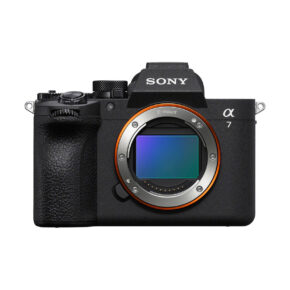
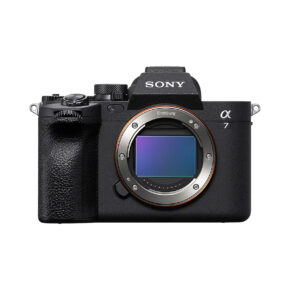
Since the release of the A7 V, more second-hand A7 IV cameras have become available, and they are an excellent buy if you don’t need the speed of the latest model. We inspect every second-hand camera, state the shutter count and fitness level, and we provide a guarantee on your purchase. See second-hand Sony cameras and read our guide before you buy buying a second-hand camera.
Are you still wondering which A7 series is right for you? Read more Sony A7 IV vs A7R V comparison and a guide The letters in the Sony A7 series (A7, A7R, A7S and A7C).
Only slightly. The resolution is the same at 33 megapixels, and according to Sony, the dynamic range is slightly wider. The biggest differences lie in speed, autofocus, image stabilisation and video, not in the quality of individual photos.
They’re compatible. Both use the NP-FZ100 battery and the Sony E-mount, and the memory card slots are the same.
Partially stacked sensor. Thanks to this, the camera shoots 30 frames per second without any viewfinder blackout, features pre-recording, and the rolling shutter distortion is now only a fraction of that of the A7 IV. Furthermore, the AI autofocus tracks subjects much more reliably.
It’s worth it if you don’t take many photos of fast-moving subjects. The A7 IV is still an excellent all-round camera, and it’s significantly cheaper than the A7 V, both new and, in particular, second-hand.
Welcome to our shop in Kouvola. You can try out the camera with your own lenses, and we’ll assess the trade-in value of your old camera at the same time.