Any questions? Give us a call 05 375 3220
Free delivery for orders over 1000 € / 30 days Return policy
Any questions? Give us a call 05 375 3220
Free delivery for orders over 1000 € / 30 days Return policy
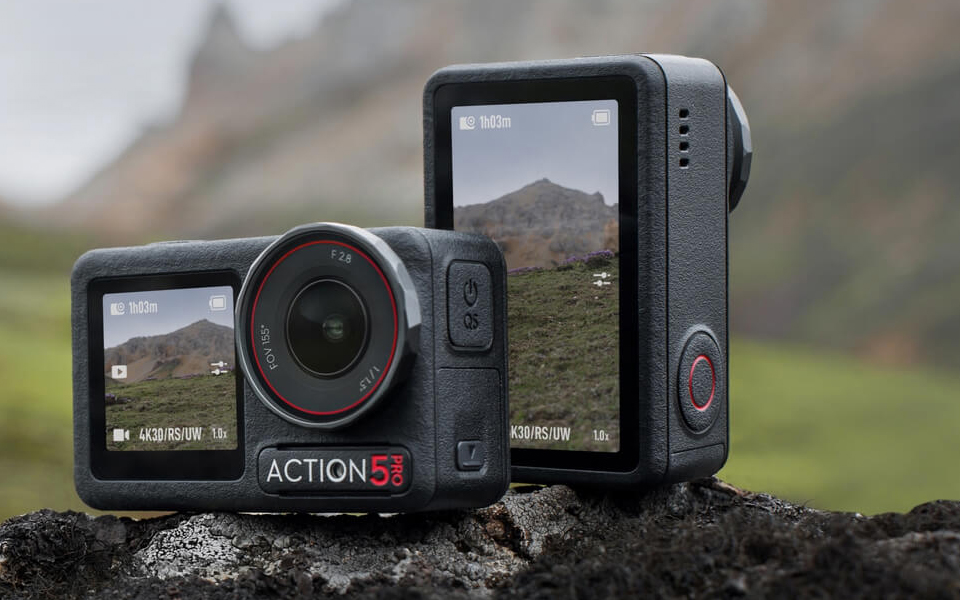
An action camera is a small, durable and waterproof camera that can be attached to almost anything: a helmet, a bike handlebar, a ski pole, a dog’s harness or a paddle. When your system camera is left at home or in your bag, an action camera captures moments that would otherwise go unrecorded. However, the range has grown so much that choosing the right model is difficult. Should you go for a DJI or an Insta360? Is it worth paying extra for a larger sensor? And is a cheaper model sufficient for a hobbyist?
Here at Foto Monza, we’ve put together this guide covering everything you need to consider when choosing an action camera. We’ll tell you which features to look out for, which models are currently the best in different price ranges, and how to get the most out of your camera whilst cycling, on the slopes and in the water. You can find our full range from our action cameras section.
An action camera is designed for action and harsh conditions. It typically features an extremely wide angle of view, a powerful electronic image stabiliser and a body that is resistant to water, dust, freezing temperatures and knocks without the need for a separate case. The camera is so small and light that it can be attached to places where a normal camera wouldn’t fit or where it would break.
Unlike a standard camera, an action camera has a fixed lens, and the photographer does not usually adjust the focus or aperture. Everything is designed to work automatically, so you can concentrate on your sport. If you want to capture all angles at once and choose the angle of view afterwards, take a look at For 360-degree cameras and Our Insta360 comparison.
Image stabilisation is the single most important feature of an action camera. Without it, a mountain biking video is nothing but unwatchable shaky footage. All current DJI and Insta360 models feature excellent electronic stabilisation: RockSteady on DJI and FlowState on Insta360. Horizon levelling keeps the landscape straight, even if the camera tilts. These days, there’s little difference in stabilisation quality between models, but it’s worth keeping it switched on almost all the time.
In bright daylight, almost any action camera performs well. The differences become apparent in low light: on a forest path, on a cloudy winter’s day, on an evening run and indoors. A larger sensor captures more light and produces less noise. In the latest models, the sensors have grown significantly. For example, the DJI Osmo Action 6 has a 1/1.1-inch sensor, whilst older and more affordable models typically have a sensor of 1/1.3 inches or smaller. During Finland’s dark seasons, this is a feature worth taking seriously.
4K video is sufficient for almost any hobbyist use. Higher resolutions, such as 8K, mainly provide the flexibility to crop the image afterwards. More important is the frame rate: 4K60 makes fast movement look smooth, whilst 4K120 or 1080p240 allow for impressive slow-motion shots of, for example, skiing or water splashes.
Battery life varies between models, ranging from about one and a half hours to four hours. Freezing temperatures significantly reduce it. Winter sports enthusiasts should choose a model that the manufacturer has confirmed will work in freezing conditions, and purchase at least one spare battery. Many cameras also work whilst being charged from a portable power bank, which is handy on long trips.
Most action cameras can withstand depths of 10–20 metres without a housing. This is sufficient for swimming, canoeing, snorkelling and in rainy conditions. For scuba diving, you’ll need a separate diving case. Smaller mini-cameras are generally less waterproof, and some of their control units aren’t waterproof at all.
A front screen or flip-out screen is almost essential if you’re filming yourself, for example whilst vlogging or travelling. Large touchscreens and physical buttons make the camera easy to use, even when wearing gloves. The magnetic quick-release mount, used by both DJI and Insta360, makes it much quicker to move the camera from one mount to another.
We have divided the most popular models into three price categories. You can find the exact prices and availability on the product pages.
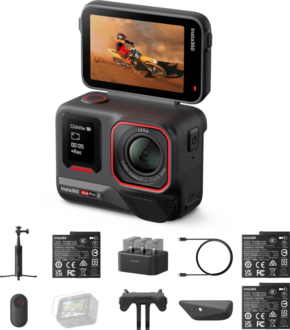
Even in the lower price range, you can get an excellent camera these days. DJI Osmo Action 4 It’s still a very capable camera. It features a 1/1.3-inch sensor, 4K120 video, 10-bit D-Log M and is waterproof to 18 metres, whilst the Adventure Combo package includes spare batteries and mounts. Insta360 Ace Pro features optics developed in collaboration with Leica and a tilting screen, which is handy for vlogging. Insta360 Ace Pro 2 Rises to the top of its price range: 8K30 video, two processors and improved low-light performance.
If a compact size is the most important criterion, Insta360 GO 3S It weighs just around 39 grams and attaches with a magnet to, say, a T-shirt or a cap. If you’re on a tight budget, it’s also worth having a look at our selection of second-hand action cameras, which varies from time to time.
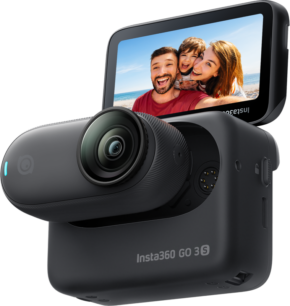
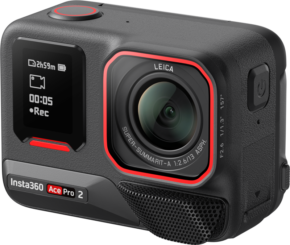
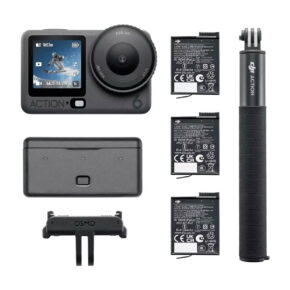
This is the price range that offers the best value for money for most enthusiasts. DJI Osmo Action 6 It is currently one of the most capable action cameras on the market. It features a 1/1.1-inch sensor, an adjustable aperture (f/2.0–f/4.0) – a rarity in action cameras – 4K120 video, water resistance up to 20 metres and 50 GB of internal storage. Thanks to its adjustable aperture, the camera performs well in both low light and bright sunlight.
DJI Osmo Action 5 Pro It’s a sure-fire choice, especially for long days. The battery lasts up to four hours, it has 47 Gt of internal storage, and both the front and rear displays are bright OLED touchscreens. The Adventure Combo comes with three batteries and a charging case. Insta360 GO Ultra This, on the other hand, is the best choice if you want the smallest possible camera without compromising on image quality. It weighs just 53 grams and features a 1/1.28-inch sensor and 4K60 video.
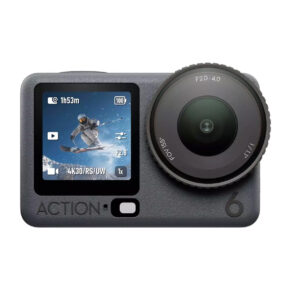
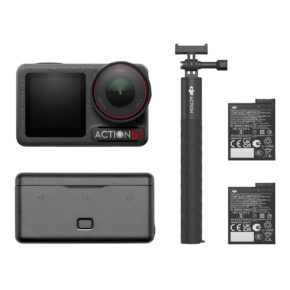
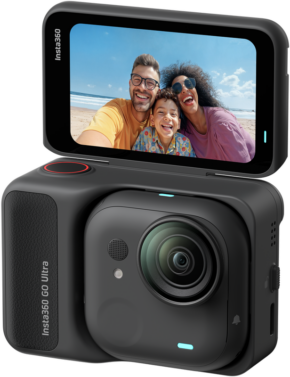
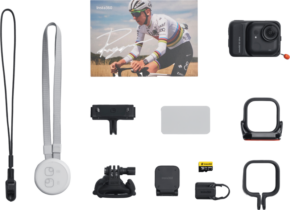
In the premium price range, you’re mainly paying for more comprehensive camera packages. The camera itself is the same as in the mid-range category, but everything you need is included straight away. DJI Osmo Action 6 Adventure Combo includes spare batteries, a charging case and an extension arm. Insta360 Ace Pro 2 Creator Bundle has been put together to meet the needs of vloggers and content creators, and GO Ultra Premium Cycling Bundle for cyclists. A bundle is usually better value than buying the same accessories separately.
If you shoot more vlogs and travel videos than sports, you might also want to consider a gimbal camera, such as DJI Osmo Pocket 4. Mechanical stabilisation and a large sensor make it excellent for walking and talking videos. However, it is not waterproof and is not suitable for mounting on a helmet.
| Model | Cell | Video (max.) | Waterproof without a casing | Strength | Price range |
|---|---|---|---|---|---|
| DJI Osmo Action 6 | 1/1.1″ | 4K120 | 20 m | Adjustable aperture, ideal for low-light photography | The middle class |
| DJI Osmo Action 5 Pro | 1/1.3″ | 4K120 | 20 m | Battery life, two OLED screens | The middle class |
| DJI Osmo Action 4 | 1/1.3″ | 4K120 | 18 m | Value for money | Affordable |
| Insta360 Ace Pro 2 | 1/1.3″ | 8K30 | 12 m | Tilting screen, Leica optics | Budget–mid-range |
| Insta360 Ace Pro | 1/1.3″ | 8K24 | 10 m | An affordable way to get a swivel screen | Affordable |
| Insta360 GO Ultra | 1/1.28″ | 4K60 | 10 m | 53 g, magnetic fastening | The middle class |
| Insta360 GO 3S | 1/2.3″ | 4K30 | 10 m | 39 g, smallest size | Affordable |
Values as stated by the manufacturer. Water resistance can be increased with a separate diving case.
Choose the DJI Osmo Action 6 if:
Choose the DJI Osmo Action 5 Pro if:
Choose the Insta360 Ace Pro 2 if:
Choose the Insta360 GO Ultra or GO 3S if:
Choose the more affordable DJI Osmo Action 4 or Insta360 Ace Pro if:
Many adventure enthusiasts wonder whether simply system camera. The answer depends on what you’re photographing. A DSLR is unbeatable for photography, portraits, nature photography and anything where you need interchangeable lenses, background blur or long focal lengths.
An action camera is the ideal tool when the camera is attached to you or your equipment and you need your hands for something else. It can withstand water, drops and freezing temperatures without you having to worry about an expensive lens, and its wide angle of view conveys a sense of speed in a way that a system camera simply cannot. Many photographers end up using both: a system camera for stills and an action camera for capturing movement.
A handlebar mount is the easiest way to get started, but a chest mount often produces a steadier and more dynamic image, as the camera moves with your body and the handlebars remain in the frame. When mountain biking, a helmet mount shows where you’re looking. Use 4K60 mode and horizon levelling. For road cycling, it’s also worth trying a seatpost mount that films backwards.
Frost is a battery’s worst enemy. Keep spare batteries warm in an inside pocket and replace the battery as soon as the charge starts to run low. Snow can interfere with the camera’s exposure. If the image looks grey, increase the exposure compensation slightly. On the slopes, a helmet mount or an extension arm attached to a ski pole works well, and slow-motion footage (4K120) looks impressive during jumps and turns. When you come indoors, let the camera warm up gently in your bag to prevent the lens from fogging up.
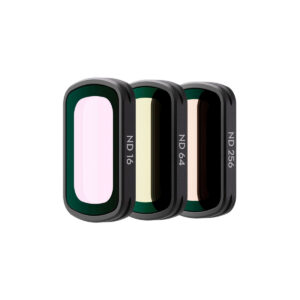
Check that the battery and port covers are securely fastened before entering the water. The floating handle will save the camera if it falls into a lake or the sea. Underwater, colours quickly turn blue-green, so a red filter or the camera’s own underwater colour mode will improve the results. When shooting on the surface, water droplets on the lens are the most common problem. Wet the lens just before taking a photo, so that the water runs off more evenly and doesn’t form droplets. After using the camera in salt water, always rinse it with fresh water.
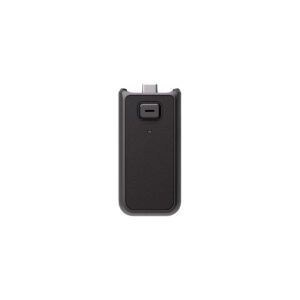
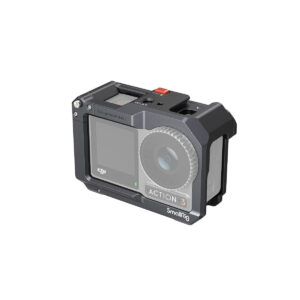
Accessories turn an action camera into a real all-rounder. These are the ones you should get first:
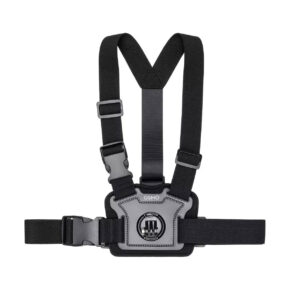
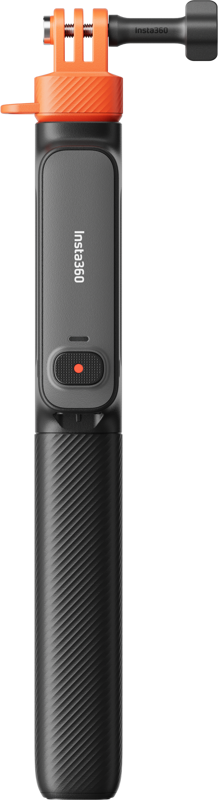
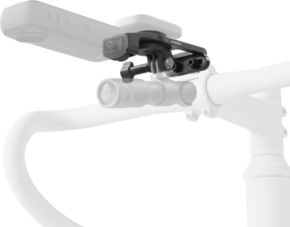
You can find the full range of accessories action camera accessories:
With an action camera, you can easily end up with hours of footage, of which only a few minutes are actually interesting. However, you don’t need professional software to edit it. The manufacturers’ free apps – DJI Mimo and the Insta360 app – transfer the videos to your phone and, using artificial intelligence, automatically create a highlight reel complete with music in just a few minutes. For more precise editing on a computer, options include the free DaVinci Resolve and DJI’s LightCut.
The best action camera depends on what you’re filming, where you’re filming it, and your budget. If you want the best image quality and do a lot of filming in low light, DJI Osmo Action 6 is the best choice at the moment. Osmo Action 5 Pro is the go-to camera for long days, and Insta360 Ace Pro 2 is ideal for vloggers who need a swivelling screen. For those looking for the smallest camera possible Insta360 GO Ultra is in a class of its own. More affordable models, such as Osmo Action 4 and Insta360 Ace Pro, are perfectly adequate for a beginner.
Once you’ve chosen a camera, set aside part of your budget for spare batteries and a model-specific mount. These factors often make more of a difference than the minor differences between cameras. If you’re still finding it difficult to choose, we’d be happy to help. Please call us on 05-375 3220, send us a message or come and try out the cameras in our shop. You’ll find all the models from our action cameras section.