Any questions? Give us a call 05 375 3220
Free delivery for orders over 1000 € / 30 days Return policy
Any questions? Give us a call 05 375 3220
Free delivery for orders over 1000 € / 30 days Return policy

A wireless microphone is the easiest way to improve video quality. The camera’s or phone’s built-in microphone picks up room reverberation and background noise, but a microphone clipped to your clothes captures speech clearly, even if the speaker is far away from the camera. In this comparison, we’ll be looking at the most popular wireless microphones – the DJI Mic, the Rode Wireless and the Hollyland Lark – and we’ll explain which one is best suited to which use case.
| Model | Weight of the transmitter | Range | Transmitter battery | Internal recording | Price range |
|---|---|---|---|---|---|
| DJI Mic Mini 2 | about 11 g | up to 400 m | 11.5 hours | No | € |
| DJI Mic Mini 2S | about 12 g | up to 400 m | 11 hours | 32-bit float, 14.5 Gt | €€ |
| DJI Mic 3 | 16 g | up to 400 m | 8 hours (28 hours with the case) | 32-bit floating-point, 32 Gt | €€€ |
| Rode Wireless GO III | compact | up to 260 m | 7 hours (21 hours with the case) | 32-bit floating-point | €€ |
| Rode Wireless PRO | compact | up to 260 m | 7 hours | 32-bit float, timecode | €€€ |
| Hollyland Lark M2S | very light | up to 300 m | about 10 hours | No | € |
The ranges are as stated by the manufacturers under unobstructed conditions. In practice, walls, people and other wireless devices reduce the range.
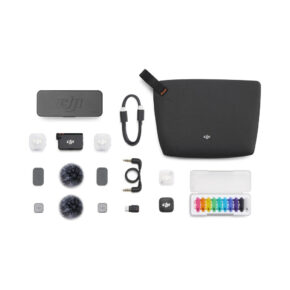
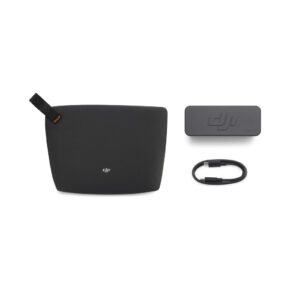
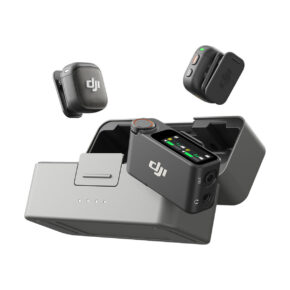
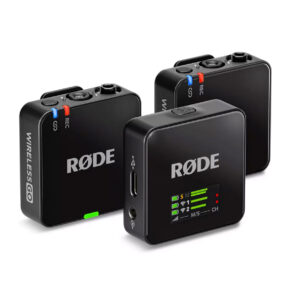
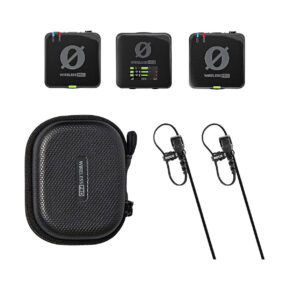
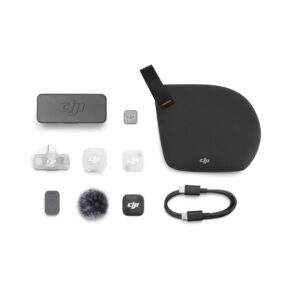
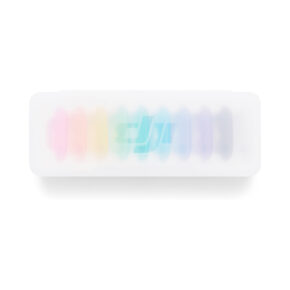
The DJI Mic Mini 2 is one of the lightest wireless microphones: the transmitter weighs around 11 grams, so it doesn’t weigh down your clothes and is barely visible in the shot. The battery lasts up to 11.5 hours, which is enough for a whole day’s filming. Two-stage noise cancellation suppresses background noise, and with interchangeable magnetic covers, you can choose the colour of the transmitter to match your outfit.
The Mic Mini 2 connects directly to DJI’s Osmo cameras without the need for a separate receiver, and to your phone via Bluetooth. It has no internal storage, so if the connection is lost, the audio cuts out. Nevertheless, it’s an excellent and affordable choice for most vlogs, interviews and social media videos.
You can choose the set to suit your needs: the standard receiver is compatible with cameras and mobile phones, whilst the smaller mobile receiver plugs directly into the phone’s USB-C port. An additional transmitter and colourful front covers are also available separately.
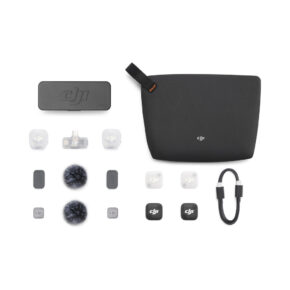
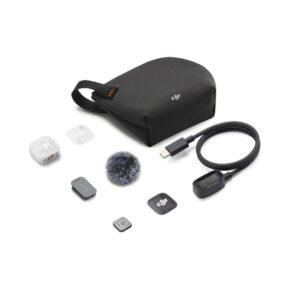
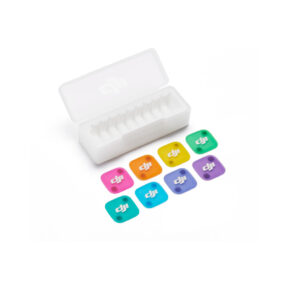
The DJI Mic Mini 2S is a new model released alongside the Mini 2, which addresses its biggest shortcoming. The transmitter has 14.5 gigabytes of memory and also records audio internally in 32-bit float format, for up to 28 hours in total. Even if the wireless connection is lost or someone shouts into the microphone, the audio is still stored on the transmitter.
The size and appearance are almost identical to those of the Mini 2, and the transmitter weighs around 12 grams. Up to four transmitters can be connected to the same receiver, and the noise cancellation is based on a new AI model. The transmitter’s battery lasts for around 11 hours. The Mini 2S is a good choice if you want a small microphone but can’t afford to miss any audio, such as during interviews and events.
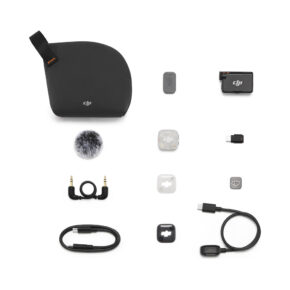
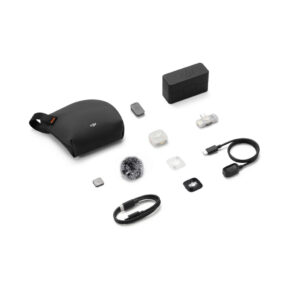
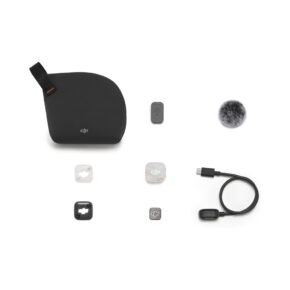
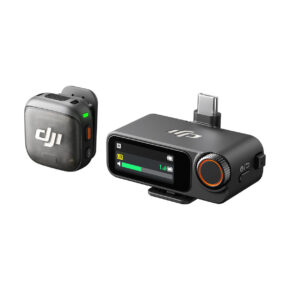
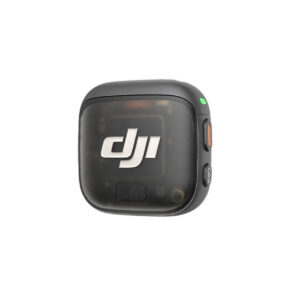
The DJI Mic 3 packs features previously found only in professional equipment into a compact design. The transmitter also records audio to its own 32 gigabyte memory in 32-bit float format, so the audio can be recovered later, even if the wireless connection is lost or someone shouts into the microphone. The transmitter records both the original and the noise-reduced versions simultaneously, and the timecode makes it easier to synchronise multiple cameras and audio during editing.
Up to four transmitters can be connected to the same receiver, which is sufficient for panel discussions and podcasts. The transmitter’s battery lasts for around eight hours, and with the charging case, the total usage time is up to 28 hours. The Mic 3 connects directly to the Osmo Pocket 3, Osmo Action cameras and the Osmo 360.
Mini 2S or Mic 3? Both record internally in 32-bit float format and support four transmitters. The Mic 3 also features a time code and has a larger memory, making it better suited to multi-camera productions. The Mini 2S is smaller, lighter and more affordable.
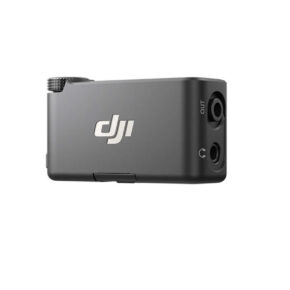
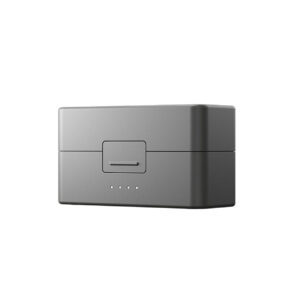
The Rode Wireless GO series made wireless microphones popular amongst content creators. The latest Wireless GO III It records audio internally in 32-bit floating-point format and features a dedicated record button and intelligent GainAssist level control. The receiver works via the camera’s 3.5 mm jack, as well as via USB-C on mobile phones and computers.
Rode Wireless PRO is our most popular wireless microphone amongst professionals. It features internal 32-bit float recording, time code and a charging case, and the package includes Lavalier II lavalier microphones for when you want to conceal the microphone under clothing. The Wireless PRO is a reliable choice for weddings, corporate videos and documentaries where the audio cannot be re-recorded.
More affordable Rode Wireless ME It’s a good option for conversations between two people: the receiver has its own microphone, so both the cameraman and the interviewee can be recorded using a single transmitter.
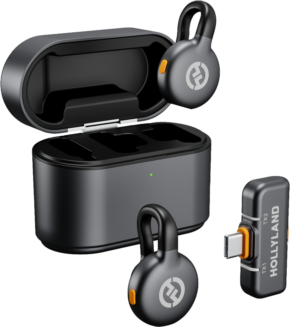
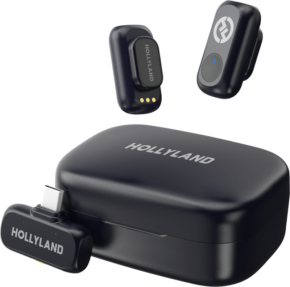
Hollyland Lark M2S transmitters are small and button-sized, and can be attached using a clip, a magnet or a neck strap. The battery lasts for around 10 hours, the range is up to 300 metres, and receivers are available for cameras, USB-C and the iPhone’s Lightning connector. The most affordable Lark A1 It’s a good first wireless microphone for a mobile phone, and for professional use the range includes Lark MAX 2.
For your phone, you’ll need a receiver with a USB-C or Lightning connector, or a microphone that connects via Bluetooth. For the camera, the receiver plugs into the 3.5 mm microphone socket and attaches to the hot shoe. Most new kits come with both connectors, but do check the contents of the pack before you buy.
One transmitter is enough when you’re speaking to the camera yourself. For interviews and videos featuring two people, you’ll need two transmitters. A set of two transmitters is almost always better value than buying two transmitters separately.
32-bit float recording covers such a wide dynamic range that the sound cannot, in practice, become distorted due to excessive volume. If someone laughs or shouts into the microphone, the audio level can be adjusted afterwards without any distortion. This feature is useful when the audio cannot be re-recorded, such as at weddings and events.
If you’re mainly filming a speaker sitting still close to the camera, a wired lavalier microphone, such as the Rode SmartLav+ or Rode Lavalier GO, is an affordable and reliable option that doesn’t require charging. A wireless microphone is better when the speaker is moving around or is further away from the camera.
You can view the full range in the section wireless microphones. You can find additional transmitters, charging cases and adapters in the section microphone accessories. If you need a microphone for your camera, see also on-camera microphones.
The DJI Mic Mini 2 is the best choice for most people: it’s lightweight, has a long battery life and is affordable. The kit, which includes a mobile receiver, plugs directly into your phone’s USB-C port. The most affordable option is the Hollyland Lark A1.
The difference lies in the internal storage. The Mini 2S also records audio to the transmitter’s own memory in 32-bit float format and supports up to four transmitters, whereas the Mini 2 has no internal memory and can only support two transmitters. If you’re filming social media videos and vlogs, the Mini 2 is more than adequate. If you absolutely cannot afford to lose any audio under any circumstances, choose the Mini 2S.
The DJI Mic 3 is smaller and lighter, and offers a longer range and battery life. It is a particularly good choice if you use DJI’s Osmo cameras. The Rode Wireless PRO is a well-established professional tool that comes with lavalier microphones. Both feature internal 32-bit float recording and timecode.
It works. Newer iPhones have a USB-C port, which is compatible with USB-C receivers. For older iPhones, choose a Lightning receiver or adapter, or use a Bluetooth microphone, such as the DJI Mic Mini 2.
You can. Come to our shop in Kouvola to listen to and compare microphones, and we’ll help you choose the right model for your camera or mobile phone.