Any questions? Give us a call 05 - 375 3220
Free delivery for orders over 1000 € / 30 days Return policy
Any questions? Give us a call 05 - 375 3220
Free delivery for orders over 1000 € / 30 days Return policy
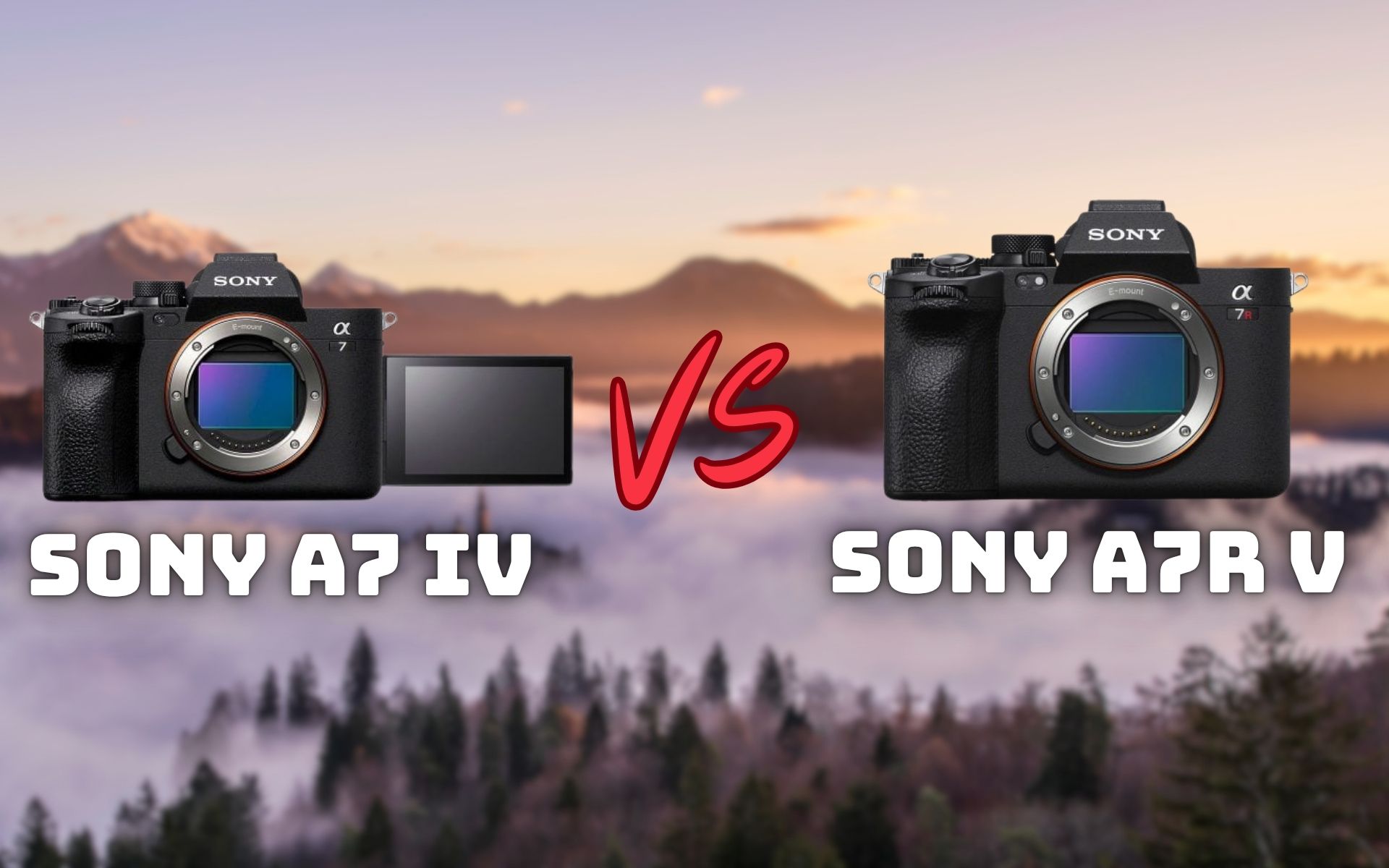
In the world of photography, few things cause as much headache and excitement as choosing a new camera body. Sony's Alpha series in particular has set the bar high, with two of its brightest stars, A7 IV and A7R V, are on many an enthusiast's dream list. Both are exceptionally capable cameras, but they are designed for slightly different purposes and different photographers.
At Foto Monza, we know that staring at spec lists can be exhausting. That's why we're going to take a look at what the differences really mean in practical shooting situations - from the perspective of you, the passionate photography enthusiast. Is the A7R V's superiority worth the price, or does the A7 IV offer everything you need and more?
| Feature | Sony A7 IV (Cheaper solution) | Sony A7R V (Big bet) |
| Resolution | 33 MP (Excellent and balanced) | 61 MP (Extreme detail and margin of error) |
| Automatic focus | State-of-the-art real-time monitoring | Enhanced, broader target recognition with AI |
| Searching | 3.68M points (Good) | 9.44M points (Exceptionally good) |
| Rear screen | Side-folding | 4-axle, more versatile mechanism |
| Image stabilizer | 5.5 steps | 8.0 steps (Leading in class) |
| Video | Excellent 4K | 8K capability, but more cropping in 4K* |
| Price | More affordable, great value for money | Significantly more expensive |
*Sony A7R V is not a video camera, however, for video needs we recommend that you check out Sony A7S III -camera.
The biggest and most talked about difference between cameras is the resolution of the sensor.
What does this mean in practice?
Sony A7 IV is a great ”every-where”. Its 33 megapixel sensor is a huge leap forward from older cameras and delivers incredibly detailed and sharp images. File sizes are manageable, at around 35-40 megabytes (uncompressed RAW around 65MB), meaning your computer and memory card won't be immediately on their knees. This resolution is perfect for printing even large prints and leaves plenty of room to crop the image afterwards without losing quality. For most enthusiasts, 33 megapixels is the perfect balance between quality and practicality.
Sony A7R V is the king of resolution. Its 61 megapixels capture a breathtaking amount of detail. It's a feature that will particularly benefit landscape and studio photographers who want to print huge, gallery-quality works. Another major advantage is the extreme cropping range. You can shoot a large landscape and crop a small part of it, which is still a high-quality image in itself. This is invaluable in nature photography, for example, when you can't get close enough to the subject.
Do you really need 61 megapixels? If you mainly shoot family, travel and general street photography, the A7 IV is more than adequate. But if your passion is capturing landscapes, architecture or wildlife, and you enjoy deep editing and cropping, the A7R V's sensor opens up a whole new world of possibilities. But remember that high resolution also requires the best possible lenses and a stable shooting technique to get the most out of it.
Both cameras are renowned for their top-notch autofocus, but the A7R V takes the game to a new level.
Sony A7 IV inherits from the much acclaimed flagship A1 model. Its real-time monitoring and eye tracking of people, animals and birds is fast and reliable. It locks on to the target and stays locked on persistently. In the vast majority of situations - from potshots to sports - the A7 IV performs flawlessly.
Sony A7R V introduced something completely new: a separate processing unit based on artificial intelligence (AI). This is not just marketing talk. Not only does the camera recognise eyes or faces, but it understands human posture and head movements. Even if the subject turns his back, the focus remains locked on the body. It also recognises a wider range of objects directly from the menu: cars, trains, planes and even insects.
If you mainly shoot people, pets or general activity, the A7 IV's focusing system won't let you down. It's top notch. But if you specialise in bird photography, where subject recognition and tracking is everything, or macro photography of insects, the A7R V's AI focus is the real deal. game-changer. It makes difficult situations a lot easier and helps shooting a lot.
The shooting experience is not just about technology, it's also about ergonomics and how you feel about using the camera.
The A7R V simply has a better viewfinder and screen. The display mechanism in particular is a real innovation in terms of usability. Is that alone worth the extra price? Hardly, but it's a significant part of the A7R V's premium experience.
Ultimately, the choice is yours. Sony A7 IV is an incredibly capable camera that does almost everything superbly and is an extremely sensible investment. Sony A7R V is a true investment and specialisation tool that rewards the photographer with unrivalled image quality and technological superiority. Whichever you choose, you'll get your hands on a great tool that will inspire you to shoot more and better.
Both cameras have been succeeded by newer models, but the A7 IV and A7R V are still available and remain excellent choices.
We’ve compiled a guide to all the A7 models and the differences between them Sony A7 series: what the A7, A7S, A7R and A7C stand for.
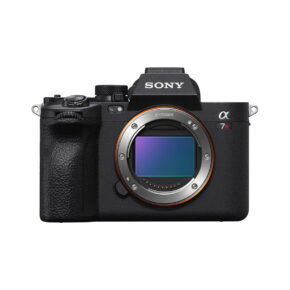
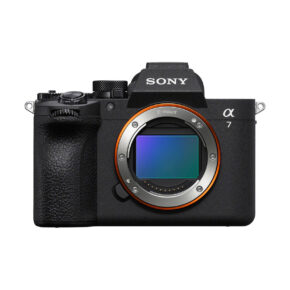
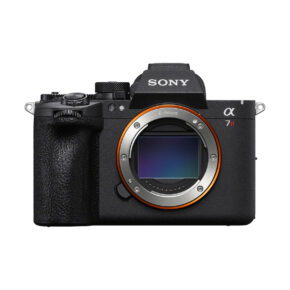
The A7 IV and A7R V hold their value well, and you can get them second-hand for significantly less than the price of a new one. We inspect every camera, provide the shutter count and offer a warranty of at least 90 days. See second-hand Sony cameras or replace your old camera to a new one, in which case the trade-in credit is deducted directly from the price.
The A7R V is technically superior: it has 61 megapixels, a more effective image stabiliser, a more precise viewfinder and AI autofocus. However, the A7 IV is the better choice for many people, as it is significantly cheaper, the file sizes are smaller, and 33 megapixels is sufficient for most purposes.
You wouldn’t normally need it if you’re taking photos of your family, on holiday or at events. The 61-megapixel resolution comes in handy for landscapes, studio shots, large prints and when you need to crop the image significantly, such as when photographing birds.
The A7 IV, as its 4K video has less cropping. The A7R V also shoots 8K video, but it is primarily a stills camera. The model specialising in video is the Sony A7S III.
The Sony A7 V, which was released in December 2025. The successor to the A7R V is the A7R VI, which was released in May 2026.
Welcome to our shop in Kouvola. You can try out the cameras with your own lenses and ask for advice on which one to choose.