Any questions? Give us a call 05 - 375 3220
Free delivery for orders over 1000 € / 30 days Return policy
Any questions? Give us a call 05 - 375 3220
Free delivery for orders over 1000 € / 30 days Return policy
Updated in October 2026.
Finland complies with the EU’s common drone regulations, and the Finnish Transport and Communications Agency is responsible for enforcing them Traficom. The rules may sound complicated, but for hobbyists they boil down to a few questions: do you need to register your drone, is a licence required, and where are you allowed to fly? We’ve put together the answers here in plain language. You can find the most accurate and up-to-date information on the Traficom website Droneinfo.fi-service.
For general recreational flying no separate flight permit is required, when flying in the open category: at an altitude of less than 120 metres, within visual line of sight and away from crowds. In most cases, however, you will need two things:
You only need a licence or a special permit if you wish to fly at an altitude of more than 120 metres, beyond visual line of sight, over crowds of people or within a restricted airspace.
The law distinguishes between two roles. They may be the same person, and in the case of an amateur, they usually are.
For example, in a family, a parent can register as the operator and a young person can fly the drone using a remote control.
A single registration covers all your drones, so you do not need to re-register when you change drones.
Traficom's A1/A3 online test It is free of charge and can be taken at home. The test covers aviation safety, airspace, privacy and regulations. A pass is valid for five years.
| Drone | Experience |
|---|---|
| C0 (less than 250 g) | Not compulsory, but recommended |
| C1 (under 900 g) | A1/A3 online test |
| C2 (under 4 kg) | A1/A3 online test + A2 supplementary test, if you are flying in the A2 sub-class |
| C3 and C4 (under 25 kg) | A1/A3 online test |
| An old drone without a C-mark, weighing less than 250 g | Not compulsory, but recommended |
| An old drone without a C-mark, 250 g – 25 kg | A1/A3 online test |
From 2024 onwards, new drones must bear a Class C marking, which specifies where and how the drone may be flown.
| Class | Printed from | Subclass | Example |
|---|---|---|---|
| C0 | less than 250 g | A1 | DJI Neo 2, DJI Flip, DJI Mini 4 Pro |
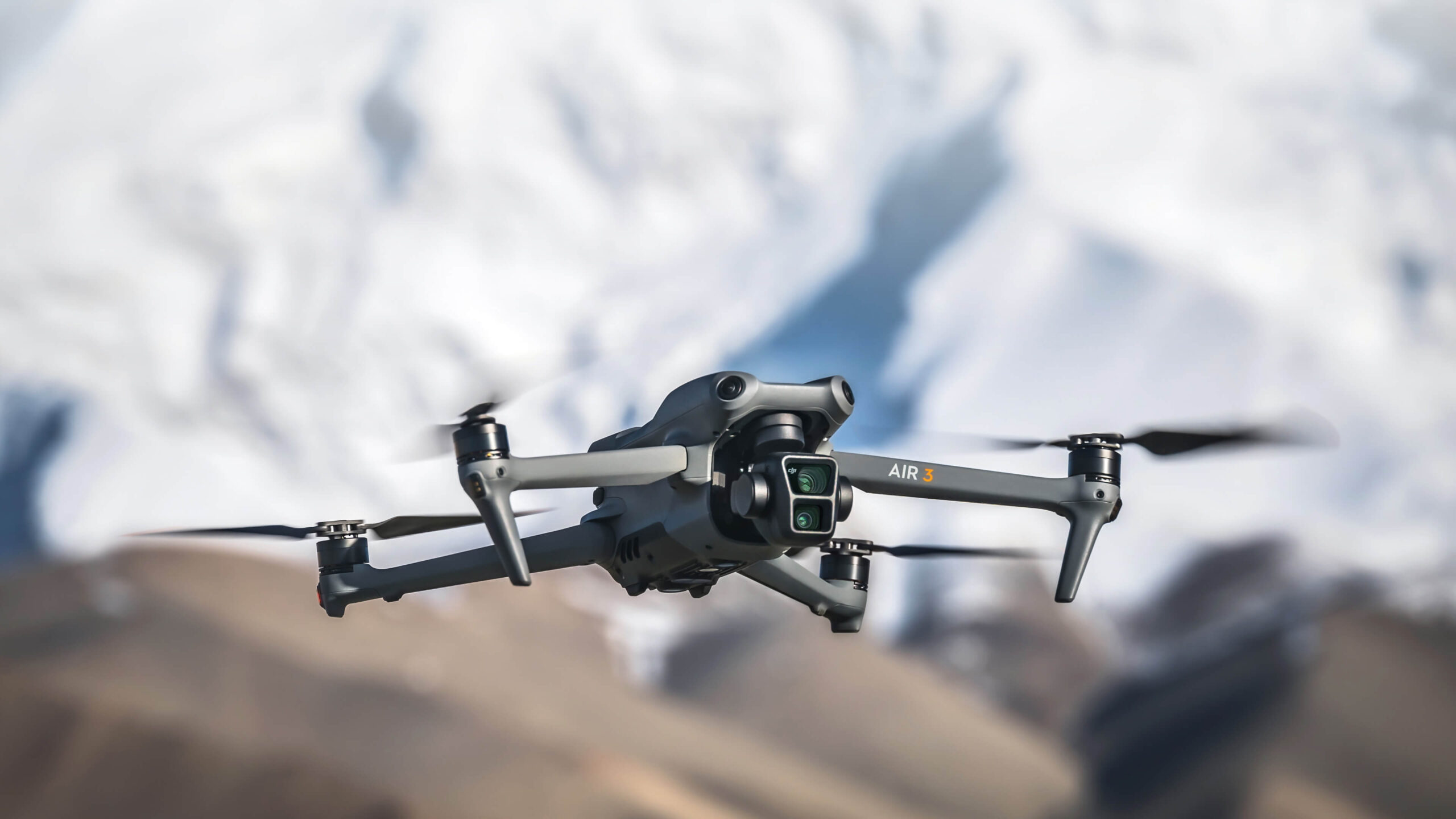
| C1 | less than 900 g | A1 | DJI Air 3 |
| C2 | less than 4 kg | A2 (or A3) | DJI Mavic 4 Pro |
| C3 / C4 | less than 25 kg | A3 | Specialised use, e.g. agriculture and forestry |
Drones in classes C1, C2 and C3 must be equipped with remote identification (Remote ID), which transmits the operator ID and location during flight. This is not required for C0 drones.
Drones placed on the market before 2024 may still be used, but subject to more restrictions:
If you’re considering buying a second-hand drone, check its class before purchasing. We’d be happy to advise you on what the second-hand drones we sell are suitable for.
Always check the airport before your flight Droneinfo.fi- from the service’s map or the Aviamaps app. Restricted areas may change at short notice.
The same privacy rules apply to filming with drones as to other forms of filming. Places protected by the right to privacy, such as gardens and windows, must not be filmed without permission, and recognisable individuals should not be filmed or published without their consent.
If the flight does not fall within the limits of the open category – for example, flying at an altitude of over 120 metres, flying beyond visual line of sight or dropping objects – the following is required: a specific category authorisation from Traficom or flying in accordance with the Standard Terminal Procedure (STS). Certified category is intended for high-risk operations, such as future cargo and passenger flights.
Compulsory insurance applies only to drones weighing over 20 kg. Liability insurance is nevertheless recommended for all hobbyists. Check whether the liability cover under your home insurance policy covers drones, as many policies either exclude drones or offer separate additional cover for them.
No separate permit is required for recreational flying in the open category. However, camera drones must be registered with Traficom, and operators of drones weighing at least 250 g must pass an online test.
Yes, if it has a camera. Registration is not required only for drones weighing less than 250 g that do not have a camera, or for toy drones.
Not in the open category. A separate flight permit or notification is required if you are flying in controlled airspace near an aerodrome, within a restricted area, or outside the boundaries of the open category.
For camera drones weighing less than 250 g, operator registration is sufficient. We still recommend taking the online test, as it teaches you the rules quickly and is free of charge. If you’re just choosing your first drone, take a look at our comparison DJI Neo 2 vs DJI Flip.
An operator is a person or company that is responsible for the use of a drone and is registered with Traficom. The operator must be of legal age. The drone may also be flown by someone else, such as a child aged 12 or over, under the operator’s responsibility.
C0 and C1 drones may be flown in sub-category A1 even in built-up areas, provided you do not fly over crowds or within a restricted area. However, many city centres are close to airports or controlled airspace, so always check the map first.
As a first drone, we recommend a Class C0 drone weighing less than 250 g, as the regulations for this category are the least restrictive. We compared the most popular models in our articles DJI Neo 2 vs Flip and DJI Mini 5 Pro vs Mini 4 Pro. You’re also welcome to visit our shop in Kouvola – we’ll help you choose a drone and tell you more about the rules.
View all dronet.