Any questions? Give us a call 05 375 3220
Free delivery for orders over 1000 € / 30 days Return policy
Any questions? Give us a call 05 375 3220
Free delivery for orders over 1000 € / 30 days Return policy
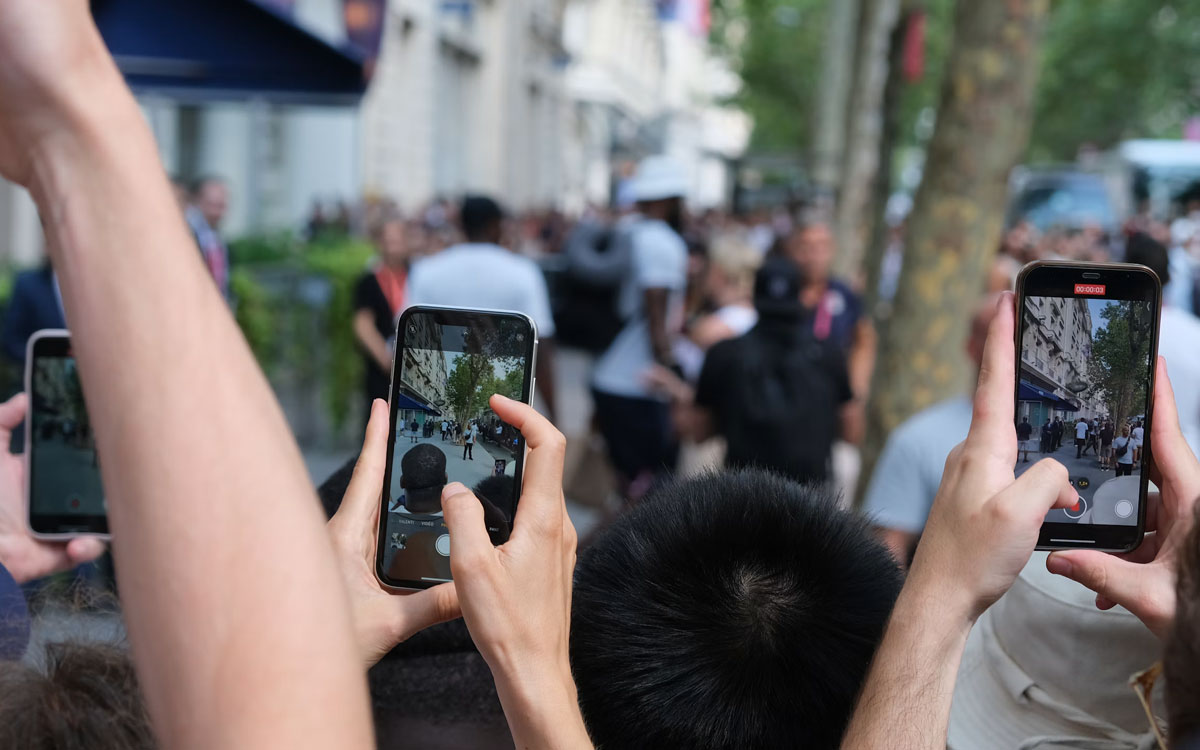
Is it allowed to take photos of strangers in the street? What about posting a photo on Instagram, using it in a business advert, or taking photos in a shopping centre? The rules on photography in Finland are fairly relaxed, but they are spread across several pieces of legislation, and for many people it is unclear where the line is drawn.
We have summarised the most important rules here in plain language. The most important rule to remember is this: Taking photographs and publishing them are two different things. You can take photos much more freely than you can publish them.
| The situation | Photography | Publication |
|---|---|---|
| People on the street, in the park or on the beach | Permitted | Generally permitted, provided the image does not infringe on privacy or reputation |
| Shopping centre, shop, restaurant | Permitted, unless the owner of the premises prohibits it | Please note: no photos of other customers whilst they are shopping, for example |
| Home, garden, stairwell, hotel room | Not without permission | Not without permission |
| Toilet, changing room | Never | Never |
| Children | Permitted in public places | Parental consent |
| A recognisable person in an advert | Permitted | Written permission is always required |
| Buildings and landscapes | Permitted | Permitted |
| Defence Forces sites displaying ‘No Photography’ signs | Prohibited | Prohibited |
In Finland, it is generally permitted to photograph people in places to which the public has free access: on the streets, in market squares, in parks, on beaches, at sporting events and at public gatherings. You do not need to ask for permission, and the person being photographed has no right to demand that the photograph be deleted simply because they are in it.
The line is drawn at harassment. If someone repeatedly photographs the same person and follows them to such an extent that the person begins to feel afraid, this may constitute stalking or another criminal offence, even if the photographing takes place in a public place.
The Criminal Code prohibits peeping: You must not take photographs of others without their consent in places protected by the right to privacy. These include, for example, a home, a holiday cottage, a hotel room, a tent, a caravan, an inhabited boat, the stairwell of a residential building and a fenced-off garden. The ban also applies to filming from outside, for example through a window or into a garden using a telephoto lens or a drone.
Voyeurism also includes taking photographs in a toilet, changing room or other similar place where a person has the right to privacy. These areas constitute an absolute boundary, even if they are otherwise located within a public building, such as a swimming pool or a gym.
It is permitted to photograph the exterior of a building, such as its façade, from the street.
Shopping centres, shops and restaurants are private property, even though they are open to the public. Taking photographs in these places is not prohibited by law, but the owner of the premises is entitled to set their own rules. If the rules and regulations or a sign prohibit photography, or if staff ask you to stop, you must comply; if necessary, you may be asked to leave the premises.
Also bear in mind the context in which the photo is published. A photo of another customer shopping, eating in a restaurant or, say, queuing at a chemist’s may reveal things they do not wish to share. Posting a recognisable photo like this is a different matter from a photo of a crowd in a shop aisle.
A photograph taken in a public place may generally be published if it depicts an ordinary scene, such as people walking down the street or an audience at a concert. Problems arise if the photograph:
Data Protection Provisions do not apply to photos that you keep for yourself or show to family and friends. When you publish a photo or video to a wide audience, for example on a public social media page or on YouTube, this constitutes the processing of personal data, and data protection regulations must also be observed. A recognisable photograph of a person’s face and a person’s voice constitute personal data. The simplest solution is to ask for consent or to blur out those for whom you do not have consent.
News journalism is an exception: it is governed by freedom of expression and journalistic guidelines, and data protection rules apply to it only to a limited extent.
The same rules apply to photographing children as to adults, but we take a stricter approach when it comes to publishing the images. Permission from a parent or guardian is required to publish a recognisable image of a child, and it is advisable to listen to the views of older children. If you’re posting a photo from, for example, a birthday party or a hobby, ask the parents of the other children for permission or crop them out of the picture.
Do not publish any information alongside a photo of a child that could be used to locate them, such as their school, nursery or home address.
If a recognisable person is featured in an advert, on a company’s social media or in other marketing material, their consent is always required. The person has the right to decide whether their image may be used to promote a product or a company. It is advisable to formalise this consent in a written standard agreement setting out the intended use, channels and duration.
The same applies to recognisable private property. If an advert clearly shows a recognisable private house or holiday cottage, it is advisable to ask the owner for permission.
You are free to photograph buildings and landscapes and to publish the photographs. You may also photograph works of art permanently displayed in public places, such as statues. If a work of art is the main subject of the photograph and the photograph is used for commercial purposes, for example on a postcard or in an advert, the artist’s permission may be required.
As a general rule, it is permitted to photograph public officials, such as police officers, whilst they are carrying out their duties in a public place, provided that doing so does not interfere with their work. If a police officer instructs you to move aside, you must comply with the instruction, but you may continue filming from a distance. The same principles apply to the publication of these images as to other photographs.
Photography in courtrooms is permitted only with the court’s authorisation. In premises and workplaces closed to the public by the authorities, a permit is required to take photographs.
Photographing Defence Forces sites may be prohibited under the Area Surveillance Act. Prohibited sites are marked with ‘No Photography’ signs, and this prohibition must also be observed when using drones or telephoto lenses. Breaching this prohibition may result in a criminal complaint being filed. Aerial photography is also subject to its own set of rules, which we discuss in more detail in the article Finnish drone legislation in plain language.
The copyright in a photograph belongs to the photographer, not to the person in the photograph. You must not publish a photograph taken by someone else as your own or use it, for example, on a company’s website without the photographer’s permission, even if you are in the photograph yourself. If you commission photographs from a photographer, agree in writing in advance on the permitted uses of the photographs.
If you’re not sure, ask for permission. Most people are happy to agree once you explain what the photo will be used for. If you can’t ask for permission, ask yourself: Would I personally want this photo of me to be published? If the answer is no, do not publish the photo or blur the faces.
It is permitted in public places. It is not permitted in places protected by the right to privacy, such as at home, in the garden or in a hotel room, or in toilets and changing rooms.
There is no obligation to remove a photograph taken lawfully in a public place. If a photograph has been published and the person depicted requests its removal, the request should be taken seriously; and if the publication infringes their privacy or contravenes data protection regulations, the photograph must be removed.
Photography is permitted on public beaches. You should exercise caution when publishing photos: a photo of a recognisable stranger in swimwear may infringe on their privacy. Changing rooms and showers are always off-limits.
No. You must not publish CCTV footage of a suspect on social media, even if the offence took place in your own shop. Pass the footage on to the police, who will decide whether to publish it.
This article is a general overview and is not a substitute for legal advice. In cases of uncertainty, please check the current legislation on Finlex.fi or consult a lawyer.