Any questions? Give us a call 05 375 3220
Free delivery for orders over 1000 € / 30 days Return policy
Any questions? Give us a call 05 375 3220
Free delivery for orders over 1000 € / 30 days Return policy

Buying a second-hand camera is one of the smartest ways to get your hands on high-quality kit. For the same price, you can often get a slightly better body or a faster lens than you would if buying new. However, when buying second-hand equipment, there are a few things you should check before you pay, especially if you’re buying from a private seller.
Here at Foto Monza, we handle up to 20 second-hand cameras, lenses and accessories every day, so we know what to look out for. We’ve put together this checklist to help you avoid the most common pitfalls.
Minor cosmetic signs of wear are normal and do not usually affect performance. However, dents, cracks, loose parts or corrosion on the battery and SIM card compartments may indicate heavy use, a fall or exposure to moisture. It is advisable to test the operation of such a device particularly carefully.
See also lens mount, i.e. bayonet mount. Slight scuffs are normal, but deep scratches or a warped mount indicate that the lenses have been changed roughly or that the camera has been dropped whilst the lens was still attached. The lens should fit securely without any play.
The shutter count indicates how many photographs have been taken with the camera and gives a good indication of how much it has been used. The shutter on an amateur camera body is typically rated for 100,000–200,000 shots, whilst that on a professional camera body is often significantly higher. You can find instructions on how to check the shutter count for the most common camera models in our article how to check the camera's shutter speed.
Bear in mind that, in mirrorless cameras, shots taken using the electronic shutter do not wear out the mechanical shutter and are not always reflected in the shutter count. A low shutter count therefore does not necessarily mean the camera has been used sparingly if it has been used extensively for video recording, for example. In such cases, the overall condition of the camera is a better indicator of how much it has been used.
Dust accumulated on the sensor appears as dark spots in photographs, particularly when shooting with a small aperture. Check the sensor by taking a test shot of a bright sky or a white sheet of paper at a small aperture (e.g. f/16 or f/22). Dust is easy to remove, but a scratch or damage to the sensor is a serious fault.
Try this too hot and dead pixels: Put the lens cap back on and take a shot with an exposure of a few seconds. Check the image at a higher magnification on your computer. Isolated bright spots in long-exposure shots are common, and most cameras can map them out using the pixel mapping function in the menu. If bright spots are already visible in normal photos, this indicates a fault.
Hold the lenses up to a bright light. A small amount of dust inside the lens is normal and will not show up in your photos. However, mould (a web-like pattern), fog and deep scratches on the front lens will impair image quality. Also check that the zoom and focus rings move smoothly, that the autofocus works and that the aperture closes properly.
Check that the camera powers on and that all the buttons, dials, display, viewfinder, autofocus and image stabiliser are working. Also check the memory card slot, battery compartment and connections. Take a few test photos and a short video clip, and view them on your computer.
Good to know: in many cameras with in-body image stabilisation, such as Olympus and Panasonic models, you can hear a slight rattling sound coming from the sensor when the camera is switched off and you shake it. This is normal, as the stabiliser is only locked when the camera is switched on.
Ask what’s included in the deal: a charger, battery, body cap, strap and lens caps. An old battery may have lost some of its capacity, so it’s worth factoring its value into the total price. It’s also worth checking that the battery included is an original one or a high-quality equivalent.
On many cameras, you can check the battery condition directly from the menu. For example, on Canon cameras, the ‘Battery Information’ menu displays the charge capacity, whilst many Sony and Nikon cameras show the battery’s remaining life or condition. If the battery is clearly worn out, factor the cost of a new battery into the purchase price.
When buying from a private individual, there is usually no warranty or right of return. Ask for a receipt and check whether the device is still covered by a valid manufacturer’s warranty. When buying from a shop, the warranty and right of return are provided by the retailer, which is often worth the price difference.
Compare the serial number on the bottom of the camera with the one on the receipt and the retail packaging. If the serial number has been sanded off or the seller refuses to show it to you, do not go ahead with the purchase. The device may be stolen.
There are plenty of good second-hand cameras for sale on online marketplaces, but there are also scammers out there. These rules will protect you:
The main difference lies in the buyer’s rights. When you buy from a shop, the Consumer Protection Act applies: if the product has a fault that you were not told about, you can demand that it be repaired or that your money be refunded. A transaction between two private individuals is not covered by the Consumer Protection Act, and the seller’s liability for defects is significantly more limited, particularly if the item has been sold ”as is”.
| Feature | Private seller | Foto Monza |
|---|---|---|
| Price | Often slightly cheaper | At market price |
| Audit | Personal responsibility | Checked and tested |
| Description of the condition | Seller’s estimate | Fitness classification K1–K5 |
| Guarantee | Not usually | At least 90 days |
| Right of return | No | 30 days |
| Consumer protection | No | Yes |
| Barter trade | Rarely | Yes |
| Payment in instalments | No | Yes |
When you buy from us, the inspection has already been carried out on your behalf. Every device we receive is tested both visually and mechanically and is graded on a scale of K1–K5. You can find a more detailed explanation of the grades on the page Condition ratings for second-hand products.
Our range is constantly being updated, so if you can’t find what you’re looking for right now, it may appear soon. Browse second-hand cameras and lenses or go straight to second-hand cameras or used lenses.
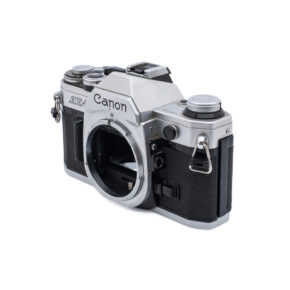
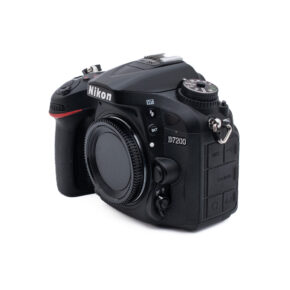
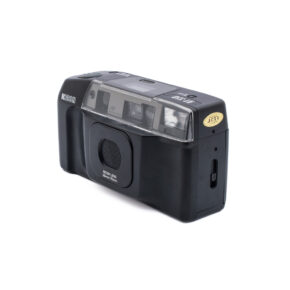
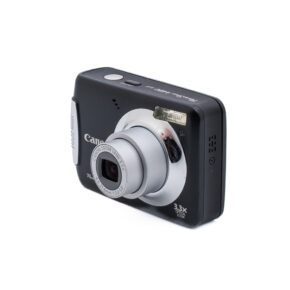
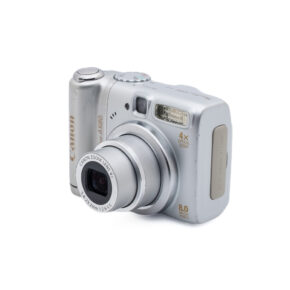
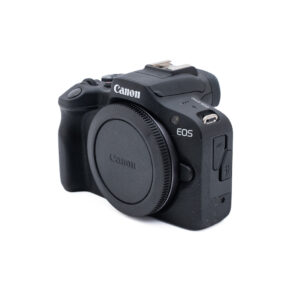
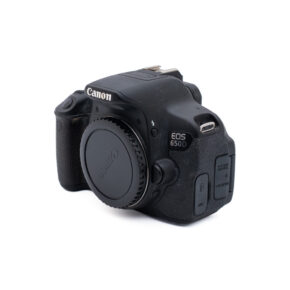
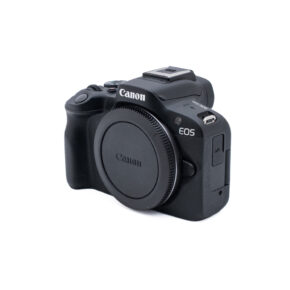
View second-hand cameras and lenses
Foto Monzalta. We sell second-hand cameras, lenses and accessories in our online shop, from which we deliver throughout Finland, and at our shop in Kouvola. We inspect every device before sale, and all second-hand devices come with a minimum 90-day warranty and a 30-day right of return. You can also replace your old camera and receive a credit note for the purchase.
There is no single limit. Compare the reading with the shutter life specified by the manufacturer: if the shutter on a hobby camera is rated for 200,000 shots, 30,000 shots is a low figure and 150,000 is a high one. The shutter may also last well beyond this estimate, and can be replaced during servicing if necessary.
Yes, lenses are often even better buys second-hand than camera bodies. They last for decades and do not become technically obsolete as quickly as cameras. Just check the lenses, the focus and the image stabiliser according to the list above. See also Checklist for buying a second-hand lens.
It is usually transferable if you have the original receipt. Warranty terms vary by manufacturer, so please check them on the manufacturer’s website.
K4 is our most common condition category: the equipment shows minor signs of normal wear and tear, but functions perfectly. All categories are explained on the page Condition ratings for second-hand products.
If you need help choosing the right device, please call us on 05-375 3220, send us a message or pop into our shop on Asemakatu in Kouvola.