Any questions? Give us a call 05 375 3220
Free delivery for orders over 1000 € / 30 days Return policy
Any questions? Give us a call 05 375 3220
Free delivery for orders over 1000 € / 30 days Return policy
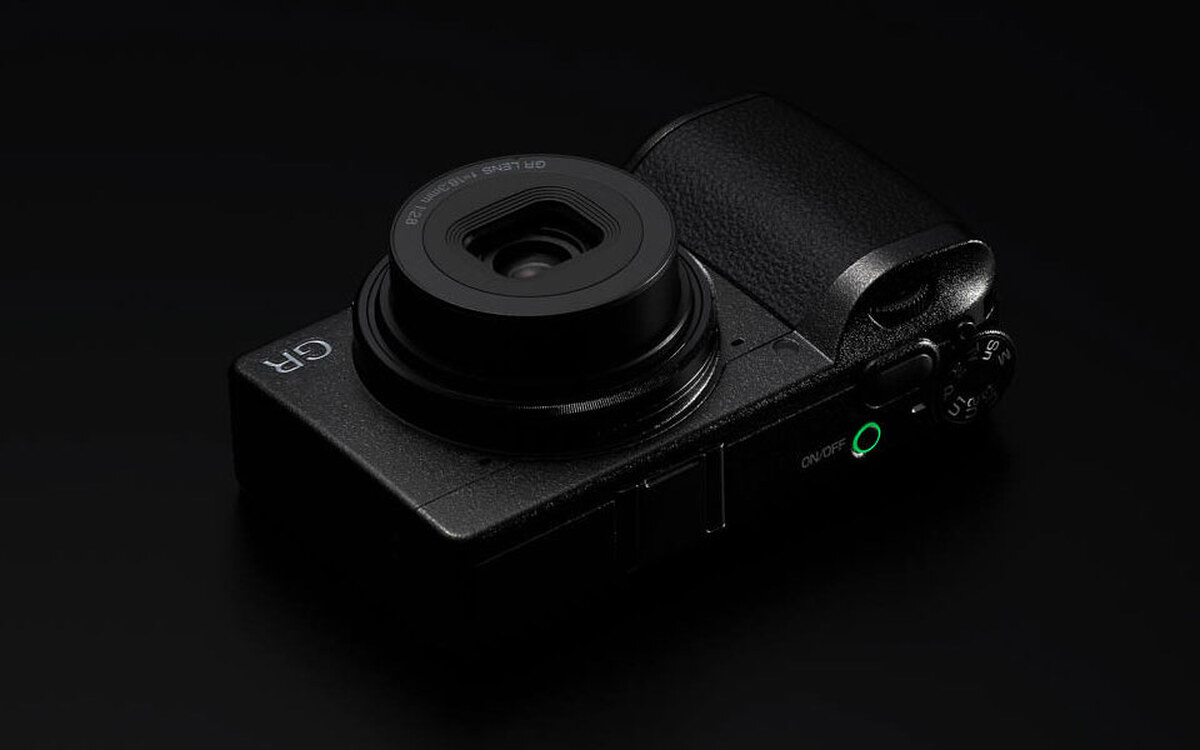
Digital camera have made a comeback. We always carry our mobile phones with us, but many people long for a camera that feels just right in the hand, produces better-quality images and encourages them to take more photos. Digital camera In other words, a compact camera combines better image quality than a mobile phone, proper controls and a pocket-sized body – without the need to change lenses or carry a camera bag.
We’ve put together a list of the most interesting compact cameras currently available for street photography, travel, video and challenging conditions, and we’ll tell you who each one is best suited to. You’ll find them all in this section digital cameras.
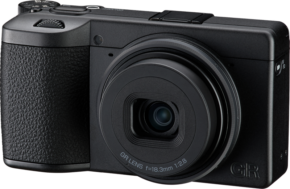
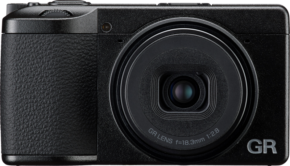
Ricoh GR It is a legend amongst street photographers, and the GR IV is the best in the series to date. The body, weighing around 260 grams, houses a 26-megapixel APS-C sensor – the same sensor size found in many mirrorless cameras – as well as a sharp 28 mm (35 mm equivalent) f/2.8 lens. The new in-body image stabilisation compensates for camera shake by up to six stops, and the camera features 53 GB of internal storage in addition to a microSD card slot. With Snap Focus, you can take photos without any delay.
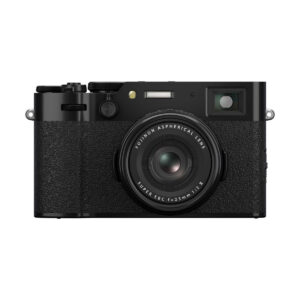
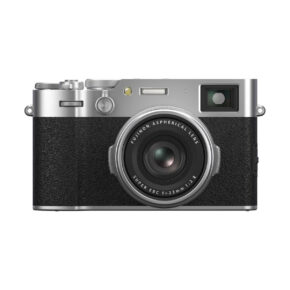
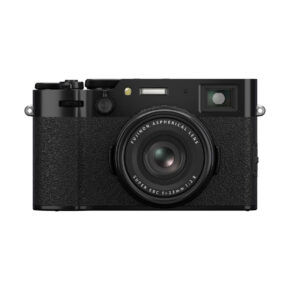
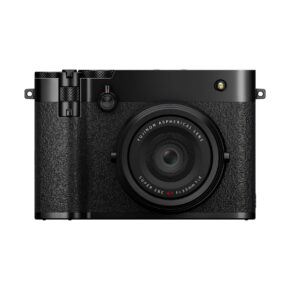
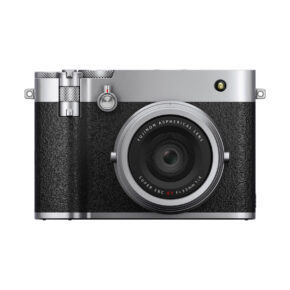
Fujifilm X100VI is one of the most sought-after cameras of recent years. The retro-style body features a 40-megapixel APS-C sensor, a 35 mm (35 mm equivalent) f/2 lens, in-body image stabilisation and a unique hybrid viewfinder that can be used as either an optical or electronic viewfinder. Fujifilm’s film simulations make photos look polished straight out of the camera. The built-in ND filter and central shutter allow you to use a wide aperture even in bright light and to synchronise the flash with slow shutter speeds.
Are you considering other Fujifilm cameras? We compared all the models, from the X100VI to the X-T5, in this article A comparison of Fujifilm cameras.
Demand for the X100VI has been high throughout its product life cycle, so delivery times vary. Order yours in good time or ask us about availability – and also take a look at second-hand Fujifilm cameras, where you can occasionally find cameras from the X100 series as well.
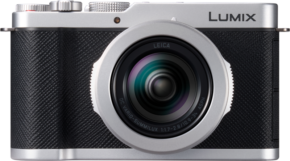
Lumix L10 is the most versatile camera on the list. The Leica DC Vario-Summilux lens covers 24–75 mm (35 mm equivalent) and is exceptionally fast, with an aperture range of f/1.7–2.8. The four-thirds sensor belongs to the same sensor family as that found in the Panasonic GH7, and thanks to the multi-format sensor, the field of view remains the same across different aspect ratios. It features a viewfinder, a tilting screen, an aperture ring and professional-grade video recording up to 5.6K and V-Log. The Real Time LUT function allows photos and videos to be given their own colour style whilst shooting.
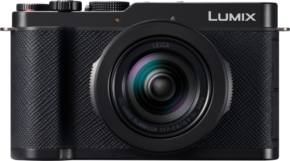
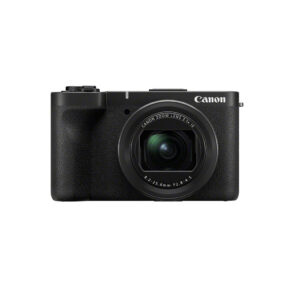
Canon PowerShot V1 is designed for content creators. It features a 1.4-inch sensor – significantly larger than those found in traditional 1-inch compact cameras – and a wide-angle 16–50 mm (35mm equivalent) zoom lens, which makes it easy to shoot self-portraits at arm’s length. A built-in fan enables over two hours of continuous 4K recording, and the camera comes with an ND filter and Canon Log 3.
Canon PowerShot G7 X Mark III It’s a classic among vloggers: a pocket-sized camera with a 1-inch sensor, a fast 24–100 mm f/1.8–2.8 zoom lens, a flip-out screen and a microphone jack. More affordable and smaller than the V1.
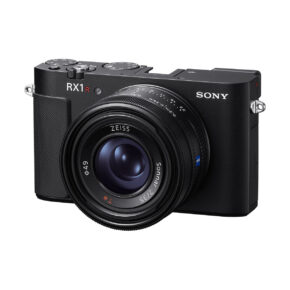
Sony RX1R III It is a full-frame compact camera: a 61-megapixel sensor, a Zeiss Sonnar T* 35 mm f/2 lens and a weight of approximately 500 grams. Sony’s AI-powered autofocus recognises and tracks subjects, and the crop modes also give you 50 and 70 mm angles of view. This camera is ideal for portrait, travel and documentary photographers who want the quality of a full-frame sensor without the need for a bag full of lenses.
Fujifilm GFX 100RF It brings a compact camera up to mid-range size. The 102-megapixel sensor is approximately 1.7 times larger than a full-frame sensor, and the fixed 35 mm f/4 lens is equivalent to 28 mm in 35 mm format. Using the aspect ratio selector, you can choose the format (e.g. 4:3, 1:1, 16:9 or panorama) directly on the camera body, and the digital telephoto extension crops the image to a 45, 63 or 80 mm angle of view – even a cropped image retains plenty of pixels at 102-megapixel resolution. A central shutter and a 4-stop ND filter are included in the kit.
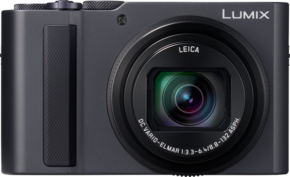
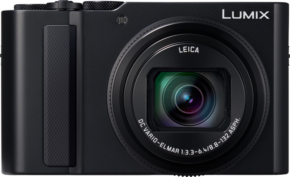
If you’re looking for a single compact camera that can capture everything from landscapes to a church spire in the distance or an animal, Lumix TZ300 is designed specifically for this purpose. The Leica’s 15x zoom covers a focal length range of 24–360 mm in 35mm equivalent, and its 1-inch, 20-megapixel sensor is significantly larger than those found in mobile phones and standard superzoom cameras. The camera weighs around 337 grams and fits in a coat pocket. It features 4K video, image stabilisation and USB-C charging, so there’s no need to take a separate charger with you when travelling.
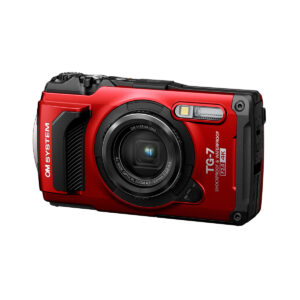
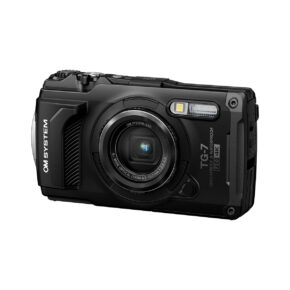
OM System Tough TG-7 It’s a camera for places where you wouldn’t want to take a mobile phone or a delicate camera. It’s waterproof up to 15 metres, can withstand a drop from 2.1 metres, a weight of 100 kilograms and temperatures as low as –10 degrees. No case is required, so the camera is ideal for snorkelling, the beach, canoeing, the ski slopes and hiking. The fast f/2 lens and excellent macro mode also make it a favourite with nature photographers: you can capture insects and plants from right up close.

| Cell | Lens (35mm equivalent) | Searching | The best | |
|---|---|---|---|---|
| Ricoh GR IV | APS-C 26 MP | 28 mm f/2.8 | No | Street photography, pocket-sized |
| Fujifilm X100VI | APS-C 40 MP | 35 mm f/2 | Hybrid | Colours, atmosphere |
| Lumix L10 | 4/3 20 MP | 24–75 mm f/1.7–2.8 | Yes | Versatility, video |
| Canon PowerShot V1 | 1.4″ 22 MP | 16–50 mm f/2.8–4.5 | No | Vlog, video |
| Canon G7 X Mark III | 1″ 20 MP | 24–100 mm f/1.8–2.8 | No | Vlog, small size |
| Sony RX1R III | Full-frame 61 MP | 35 mm f/2 | Yes | A full-frame camera in your pocket |
| Fujifilm GFX 100RF | Average size 102 MP | 28 mm f/4 | Yes | Maximum accuracy |
| Lumix TZ300 | 1″ 20 MP | 24–360 mm f/3.3–6.4 | No | Travel, long zoom |
| OM System TG-7 | 1/2.3″ 12 MP | 25–100 mm f/2–4.9 | No | Water, frost, hiking |
Fixed-focal-length cameras, such as the Ricoh GR IV, X100VI, RX1R III and GFX 100RF, are smaller, and their lenses are sharper and faster. They also teach you how to take photos: instead of using the zoom, you move yourself. Zoom cameras, such as the Lumix L10 and TZ300, PowerShot V1 and G7 X Mark III, are more versatile for travel and video recording. If you take a lot of photos of people and street scenes, go for a fixed-focal-length lens. If you want one camera to do it all, go for a zoom.
A compact camera is ideal when you need to carry your camera with you at all times. If you want to change lenses – for example, to a telephoto lens for nature or sports photography – a mirrorless camera is the better choice. Read more the best camera for a beginner, in which we compare affordable system cameras.
The Premium Compact’s sensor is many times larger than a mobile phone’s sensor, which is evident in low-light performance, dynamic range and natural background blur. What’s more, the proper controls and shutter button make taking photos quicker and more enjoyable.
It depends on the trip. If you want the longest zoom in a pocket-sized camera, go for the Panasonic Lumix TZ300. If you want the best image quality and a fast zoom lens, go for the Lumix L10. The Ricoh GR IV is the smallest camera available. The waterproof OM System TG-7 is ideal for beach holidays and active trips.
The Canon PowerShot V1 is the best choice if you’ll mainly be using it for video: it offers a wide angle of view, a cooling fan for long recording sessions, and Canon Log 3. For a smaller budget and a more compact size, the G7 X Mark III is a good option.
The OM System Tough TG-7 is the most versatile of the waterproof compact cameras: it is waterproof to a depth of 15 metres, and its fast lens and macro mode produce better results than most action cameras. If you mainly shoot video whilst on the move – for example, whilst cycling or skiing – an action camera is the better choice.
Come and visit our shop in Kouvola to try out and compare our products. We’d be happy to help you choose the camera that’s just right for you.