Any questions? Give us a call 05 375 3220
Free delivery for orders over 1000 € / 30 days Return policy
Any questions? Give us a call 05 375 3220
Free delivery for orders over 1000 € / 30 days Return policy
Thermal camera It detects animals and people based on the heat they emit, so it works in complete darkness, in fog and amongst dense vegetation. Our range includes Hikmicron thermal imaging cameras, clip-on devices and thermal binoculars for hunting, wildlife observation and outdoor activities, as well as a thermal camera that connects to a mobile phone for inspecting buildings.
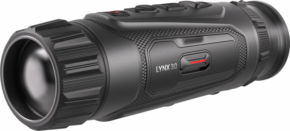
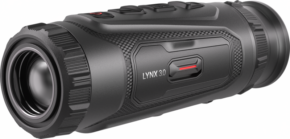
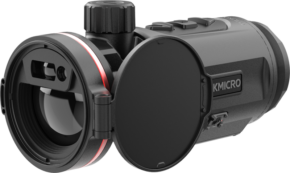
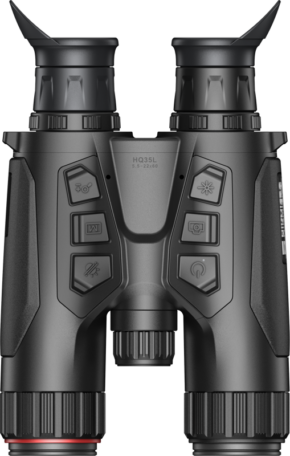
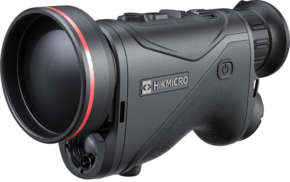
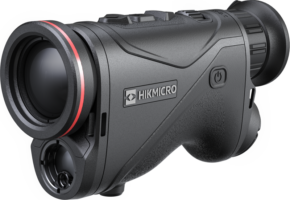
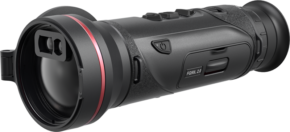
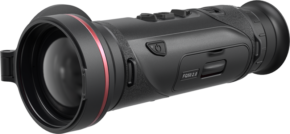
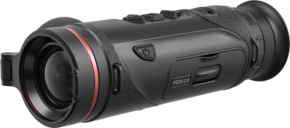
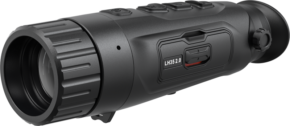
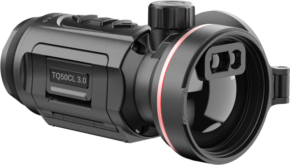
The resolution of the thermal sensor affects the image clarity and the distance from which an animal can be identified. A 256 × 192 or 384 × 288 sensor is sufficient for close-range viewing and in woodland, whilst a 640 × 512 sensor is suitable for open fields and long distances.
The model number usually indicates the lens’s focal length, for example LH15 (15 mm) or CQ35 (35 mm). A short focal length provides a wide angle of view in the forest, whilst a longer focal length offers greater magnification and a longer observation range in open areas.
The lower the NETD value, the better the camera is at distinguishing between small temperature differences. This difference is particularly noticeable in rain, fog and damp conditions, when the temperature of the animal and the background are close to one another.
The letter ‘L’ in the model name (e.g. CQ35L) indicates a built-in laser rangefinder. Most models also capture photos and videos and connect to the Hikmicro Sight app on your phone.
Before using a thermal imaging camera for hunting, check the laws and regulations in force regarding its use. If you only need a thermal imaging camera for a one-off project, such as an aerial inspection of a roof or solar panels, hire one thermal imaging drone from our partner, Kameravuokraamo. See also binoculars and telescopes.
For hunting and tracking game, a lightweight thermal imager, such as the Hikmicro Lynx, is a good first choice. If you’re taking photographs or observing over long distances in open fields, choose a model with a longer focal length and a 640-pixel sensor, such as the Condor or Falcon.
Night vision goggles amplify existing light or use infrared light, so they require at least a little light. A thermal camera detects the heat emitted by a target, so it works in complete darkness and can also see through vegetation more effectively.
Oh. A thermal camera that connects to your phone, such as the Hikmicro Explorer, would be ideal for that. Binoculars designed for hunting show temperature differences, but do not measure surface temperatures as accurately.